If You’d Like to Enjoy Life, Go See PNB’s ALL LANG

Uncategorized

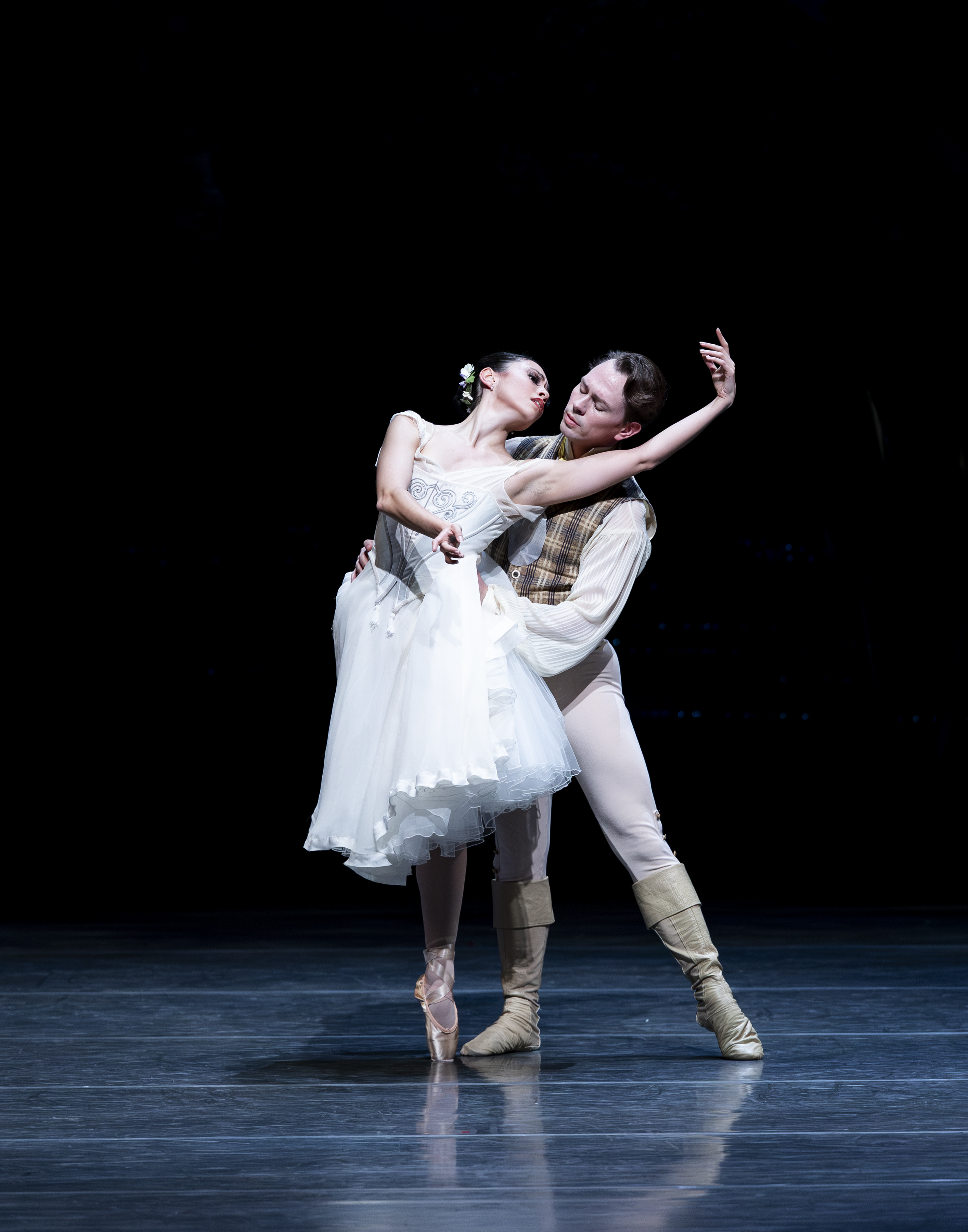
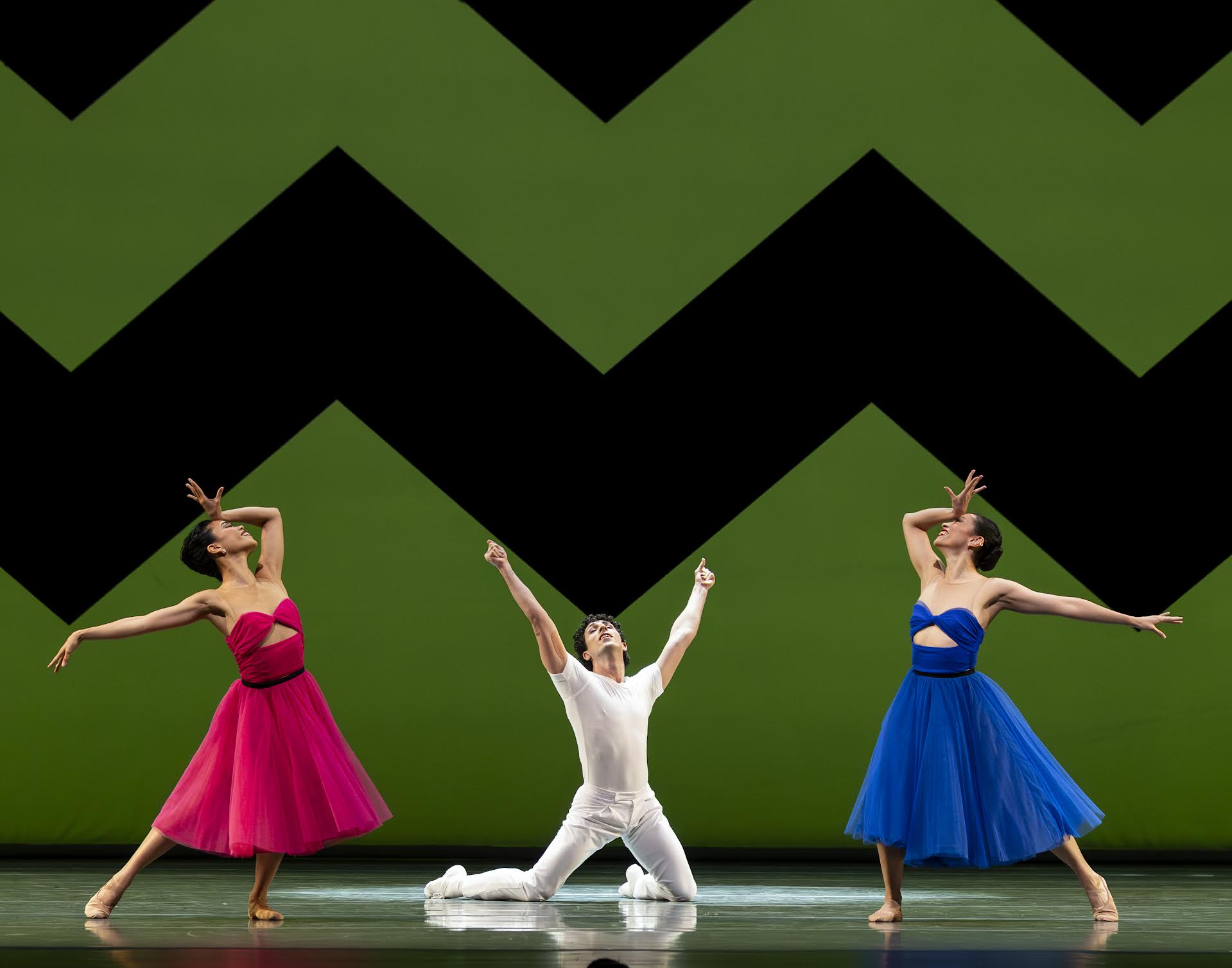
They were sweating, I was sweating, everyone was sweating. What a closer. Photo © Angela Sterling.
 

Pacific Northwest Ballet’s ALL LANG, which runs at McCaw Hall through June 7 (tickets), ends a strong season with a big ole jazzy bang.

The evening features three ballets from the company’s resident choreographer, Jessica Lang, that show the breadth and depth of her talent alongside the tremendous range and skill of PNB’s dancers. We’ve got sweeping, expansive, colorful abstract stuff! We’ve got dark, brooding, shadowy serious stuff! And we’ve got big, brassy, bold fun stuff!

It’s a show with a little something for everyone that nevertheless holds together thanks to Lang’s singular vision, the close relationship she’s built with these dancers over the years, and also PNB Artistic Director Peter Boal’s program selection.
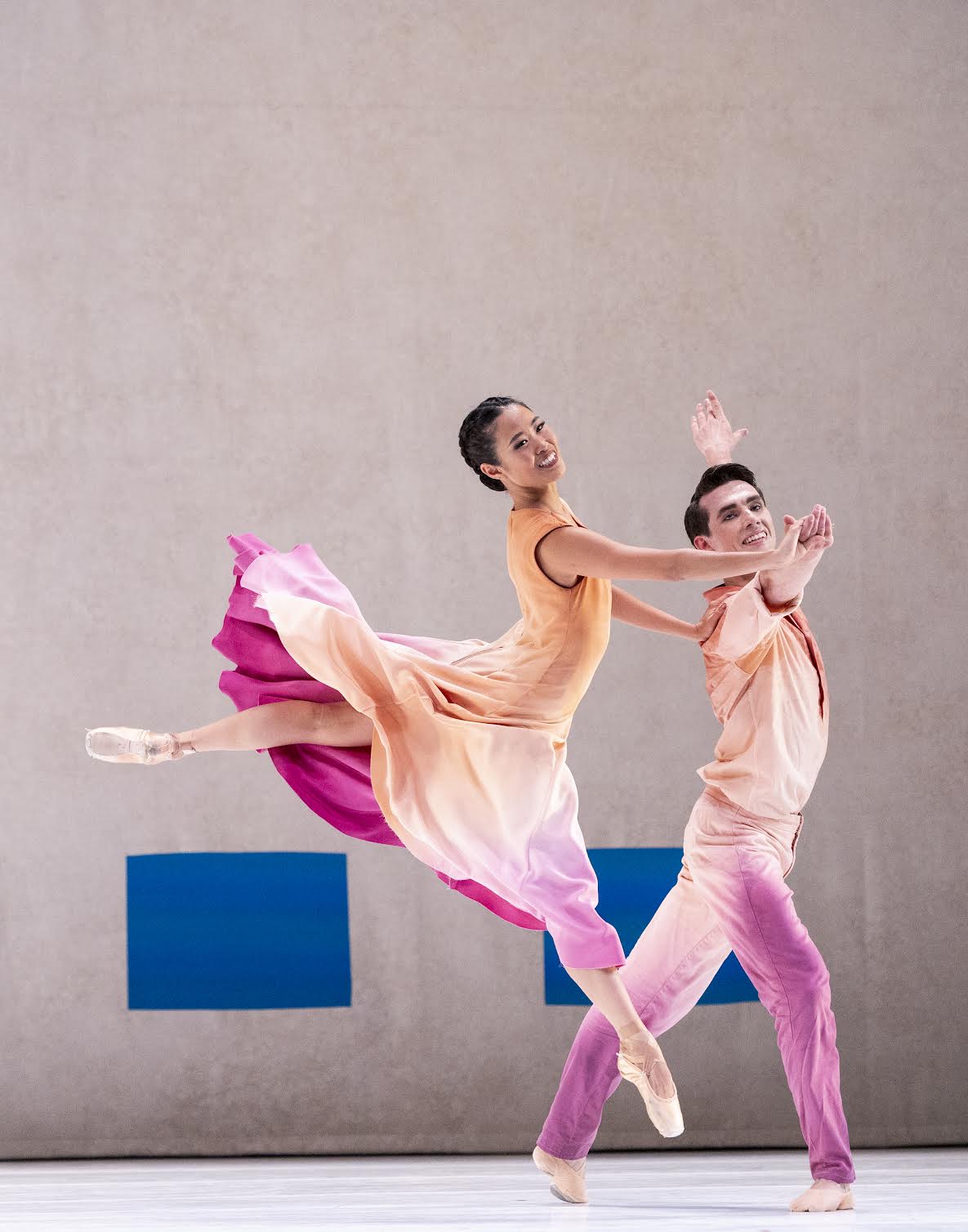
Pacific Northwest Ballet soloists Yuki Takahashi and Mark Cuddihee jumpin’ around. Photo © Angela Sterling.

The evening began with “Her Door to the Sky,” an homage (or, I guess, a femme-age) to Georgia O’Keeffe’s Patio Door series, which shows New Mexican light dressing a single square door with various hues. Lang’s balletic interpretation of those paintings faithfully reproduces O’Keeffe’s square hole washed in morning, afternoon, twilight, and evening light as dancers in Bradon McDonald’s watercolor-colored outfits dance in and around but never quite through the doors.

PNB Principal Elizabeth Murphy, who will bow out after the season’s Encore performance this Sunday, stood out in the third movement, which featured her in a peach and rose-colored costume softly floating around five male dancers like spring’s last blossom dropping from some grand flowering tree before reluctantly — and then finally triumphantly — reaching the earth.
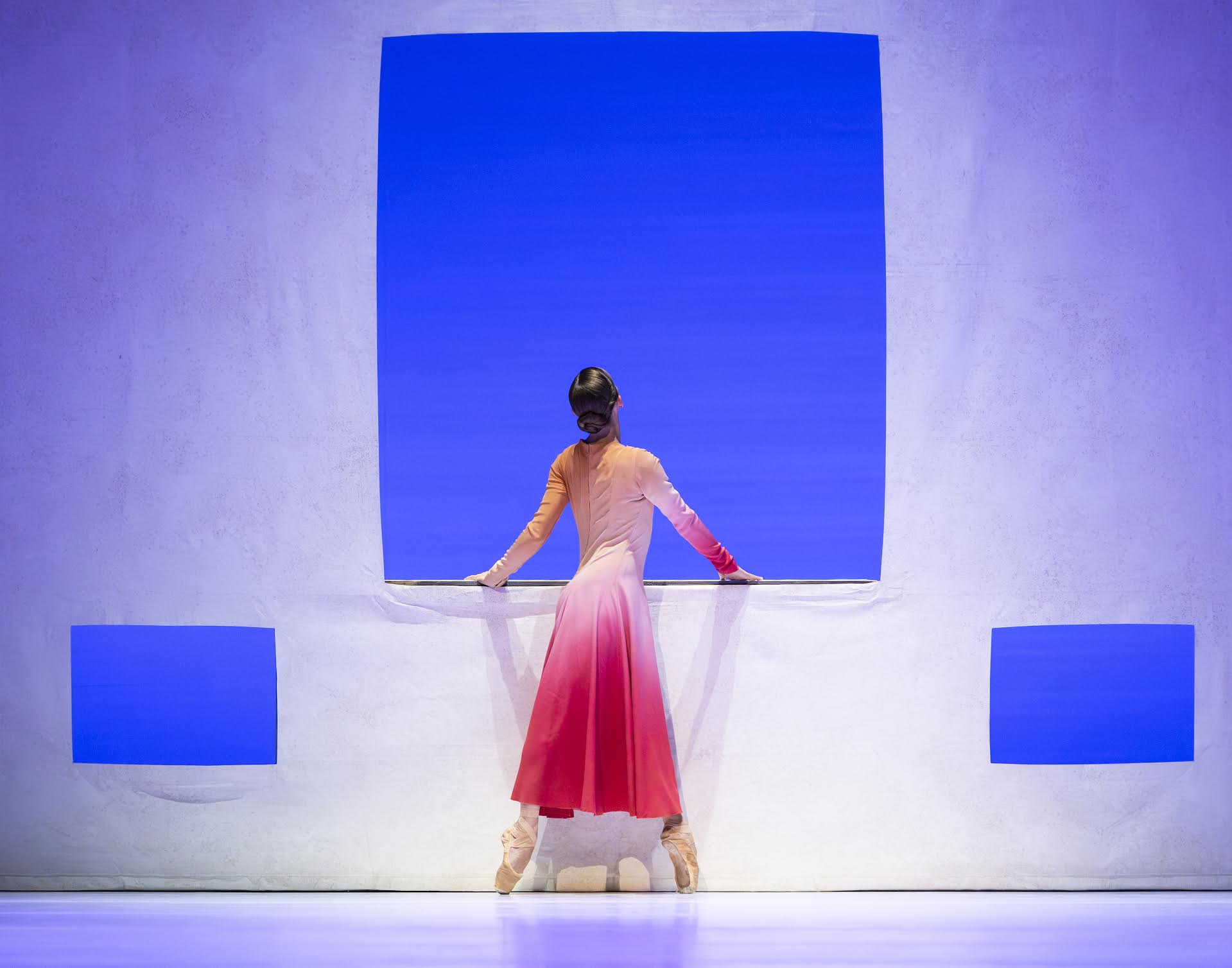
Retiring Pacific Northwest Ballet principal dancer Elizabeth Murphy, perhaps reflecting on an incredible life in dance, peering into an inevitably bright future. Photo © Angela Sterling

Soloist Kuu Sakuragi, who has been making a strong case for a promotion all year imo, continued his winning streak with one of two absolutely stunning solos this evening. In this one, he executed a zillion spins at the speed of light.

All told, the ballet is lovely to look at, but the color palette so strongly recalled Edwaard Liang’s “The Veil Betwen Worlds” (which, to be fair, premiered years after this piece) that I kept wanting to see some big silken sheet fly across the stage, or more soaring choreography, but instead I just kept seeing a lot of squares punched out of an adobe wall just kinda sitting there in the center of the stage.

After the colorful lightscapes of “Her Door to the Sky,” Lang plunged us into the black-and-white world of “Ghost Variations.” PNB’s longtime pianist Christine Siemens sat behind a piano onstage and played the titular music from Robert Schumann woven together with complementary compositions from his wife, Clara Schumann. According to the program, Schumann “believed he was visited by spirits of composers who dictated a theme to him — unaware that it was a melody he himself had already created” and dedicated the resulting piece to his wife.
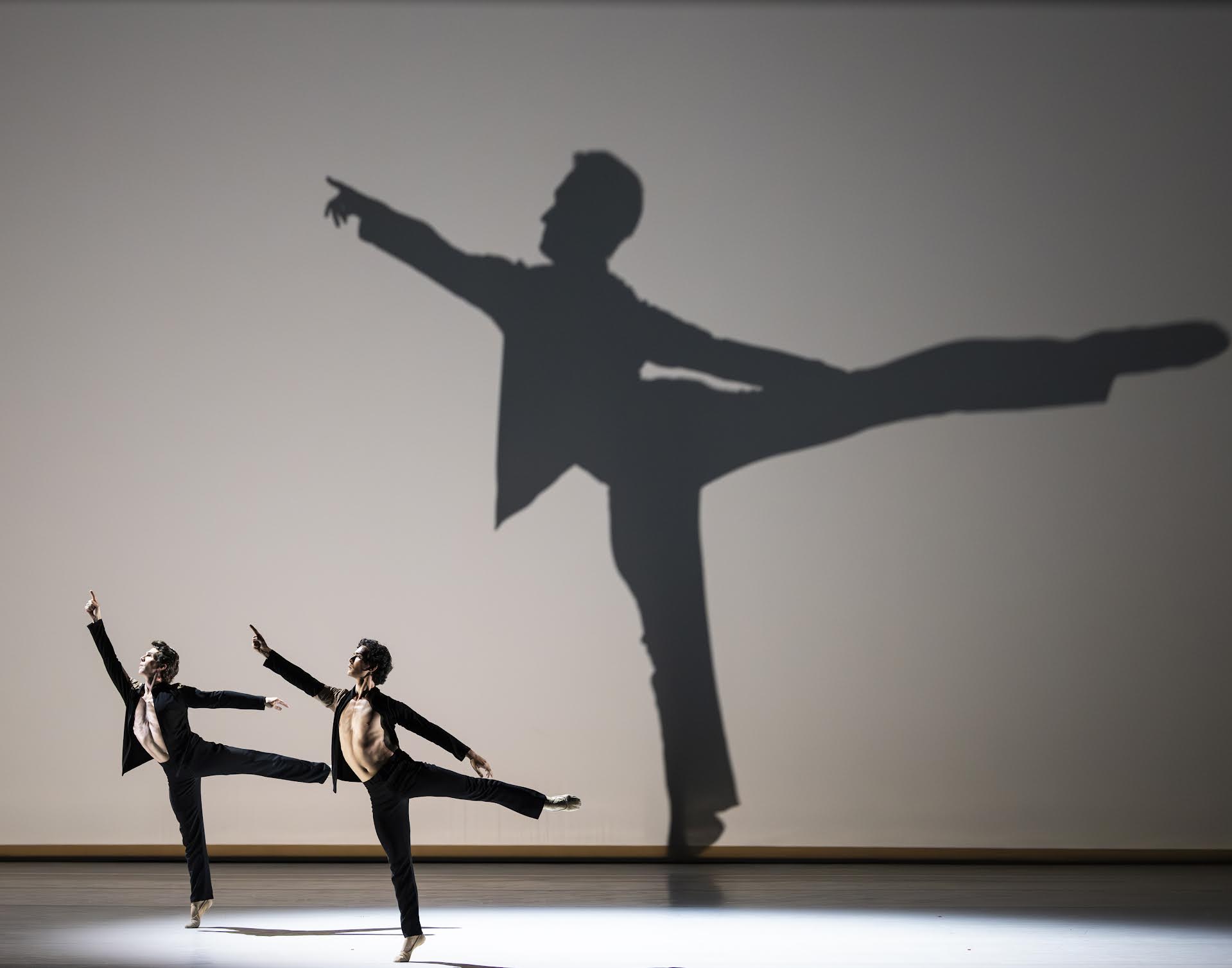
Pacific Northwest Ballet principal dancers Lucien Postlewaite and Christopher D’Ariano doing a little shadow play. Photo © Angela Sterling.

In a nod, perhaps, to Schumann flickering between the real and spirit worlds during this period, Lang and lighting designer Reed Nakayama played with shadows throughout the performance. Sometimes a dancer would dance across the stage with their shadow flung large on the backdrop, and then suddenly the shadow would spin away and do its own thing separate from the body casting it. Or in another case, during Sakuragi’s second mind-bending solo of the evening, he danced with like six or seven of his own shadows behind him. (An army of Sakuragis would be truly formidable in its speed and power.)

Those clever little moments raised deep questions about the self, love, and possible futures. What would it mean for your shadow to abandon you, or for you to abandon your shadow? Who would you be if you’d made a different choice here or there? And is a ghost of a famous composer feeding you melodies, or is it a past self you forgot about, or is it your loving wife — and is there really much of a difference?
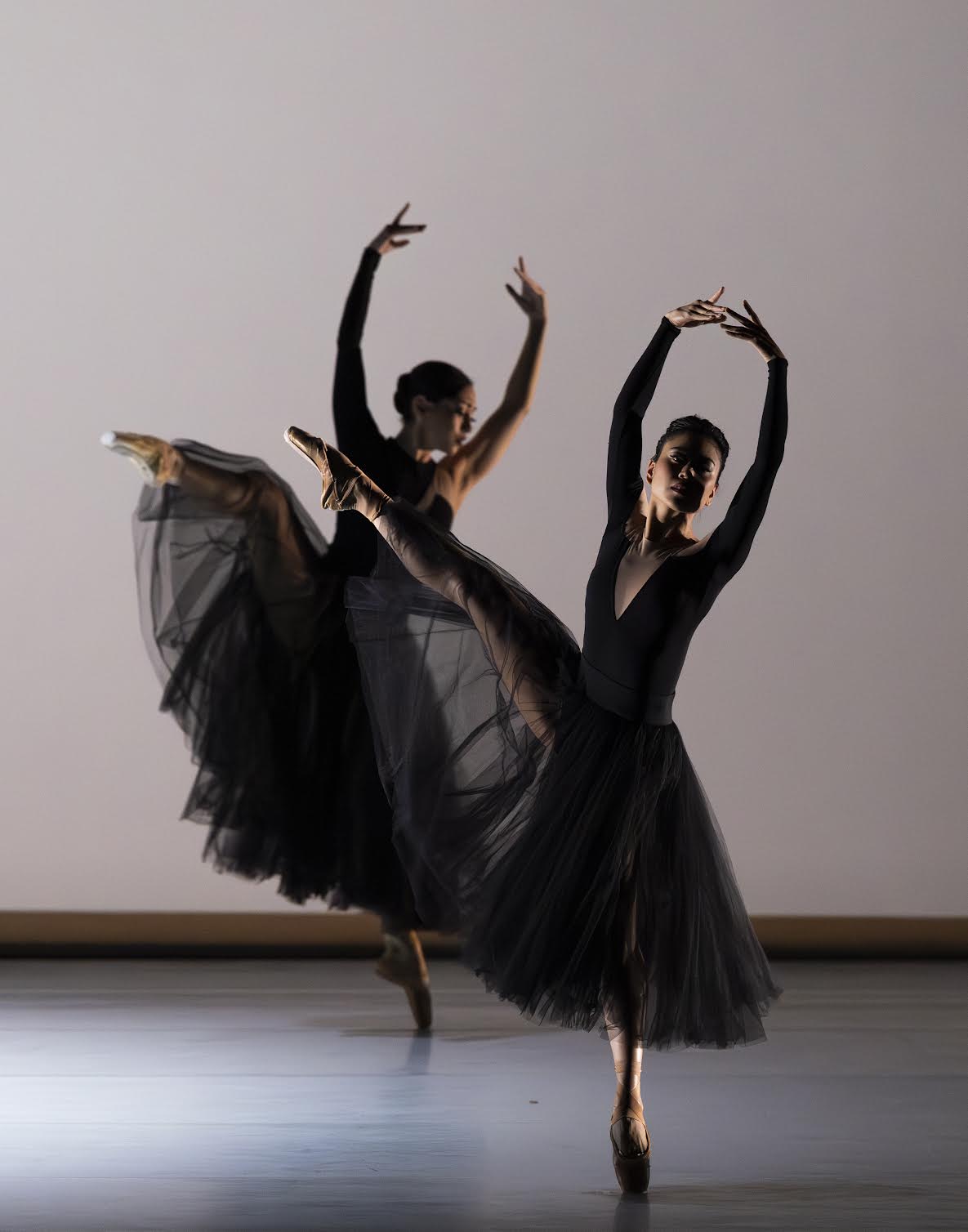
Pacific Northwest Ballet principal dancers Angelica Generosa (front) and Sarah-Gabrielle Ryan. Photo © Angela Sterling. 

Joking aside, the concluding duet between Principals Dylan Wald and Elle Macy added emotional heft to these abstract queries, and involved some of the best dancing I’ve seen on that stage in my ten years of reviewing ballet at PNB. Just exquisite, tender, mournful movement executed with Wald’s and Macy’s signature precision and elegance. I would have stood up and shouted “RUN IT BACK” if I weren’t fighting a tear.

After the deep introspection of “Ghost Variations,” the company hit us with the PNB premiere of “ZigZag,” a swinging, jazzy, big-band number set to a bunch of Tony Bennett songs. Given the music choice, I assumed Lang and PNB were aiming to pitch this one at the older crowd in a bid to stir up high school dance nostalgia, but I was flat fucking wrong.
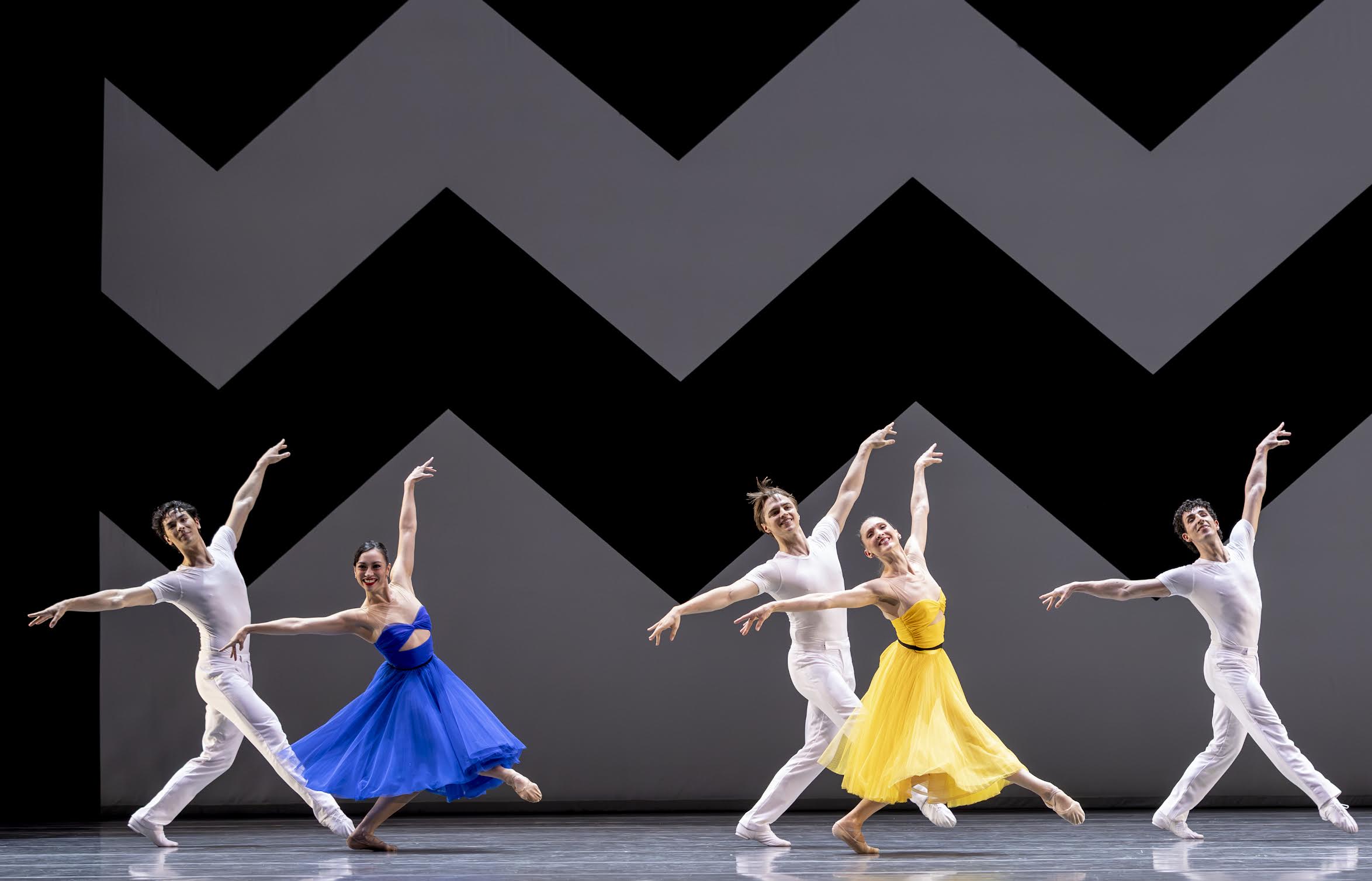
The color scheme smartly fused the palettes from the first two ballets, pairing the color of the first one with the black-and-white scheme of the second one and electrifying both. Photo © Angela Sterling. 

This ballet pumped out pure joy and exuberance of the kind one rarely finds at the ballet. Every dancer started at 11 and stayed at 11 the whole time. Every member of that opening-night cast deserved a standing ovation and got one. Is it even worth calling out the charm and sheer technical prowess displayed by principals Angelica Generosa, Sarah-Gabrielle Ryan, and Christopher D’Ariano? Should I even mention how impossibly smooth Wald looked leading “I Left My Heart in San Francisco,” or how corps de ballet members Noah Martzall, Melisa Guilliams, Kali Kleiman, Larry Lancaster, Emerson Boll, and Luca Anaya danced with enough electricity to power McCaw Hall for a decade? 

With this production, you really got the sense of the company in its imperial phase, led by a choreographer showing off her versatility, her deep love for Bennett’s music, and the power of dance to breathe new life into it. It was the kind of show that really makes you believe the old saw about performance being so special because it only happens once before evaporating into the evening. You just really had to be there. Luckily, you get a few more opportunities this week. You’d be crazy not to take at least one of them.
Giselle on Edge 

Uncategorized
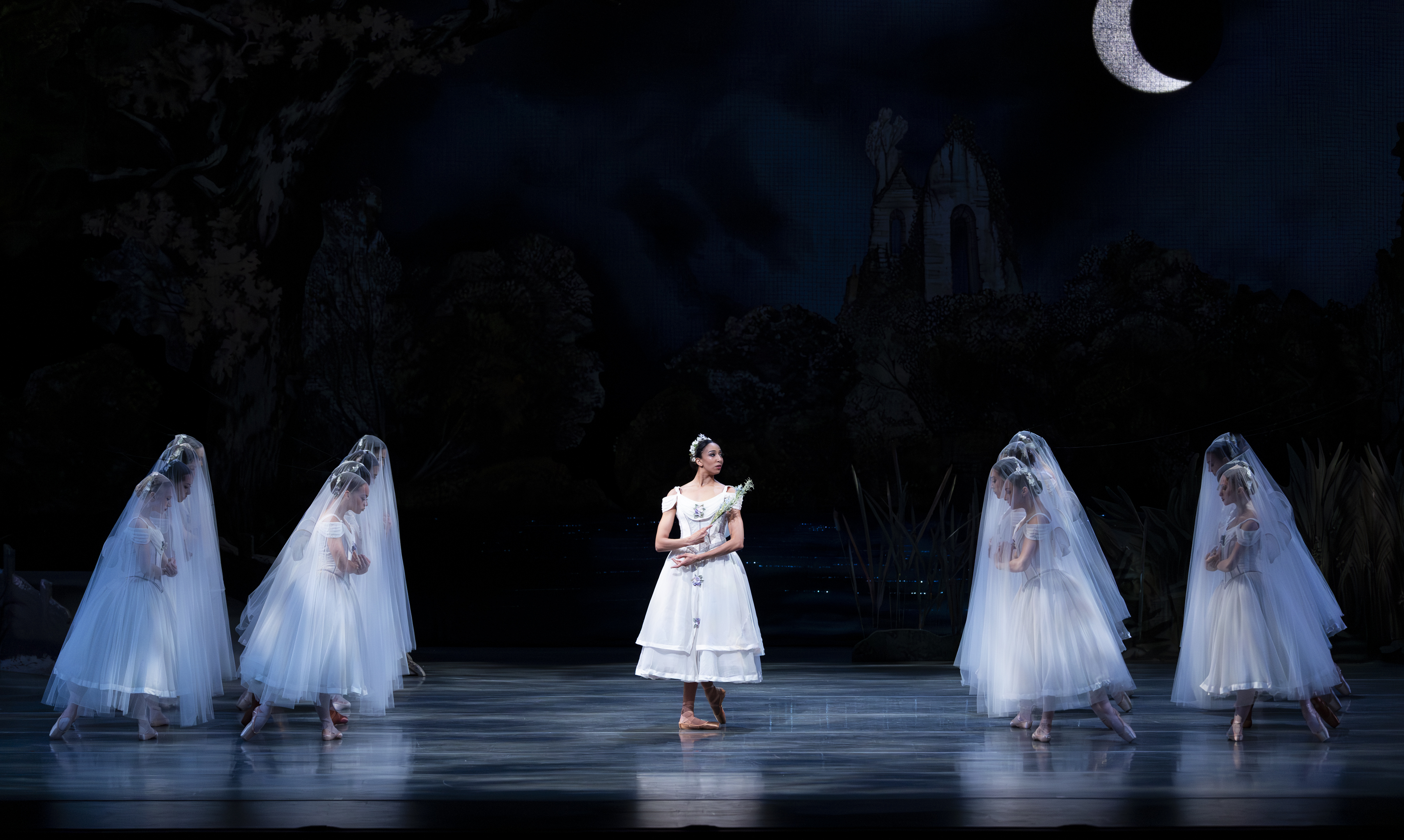
Spooky spring. Photo credit: Angela Sterling

Despite my well-documented and admittedly somewhat tedious aversion to old, floofy, fairy tale ballets, I’m glad I decided to overrule my bias, march into McCaw Hall, order my customary pint of sparkling wine, and join an audience all giddy and anxious to see Pacific Northwest Ballet’s Giselle, an evening-length production that runs through April 19. 

After all, like anything created by French Romantics in 1841, the narrative is deeply weird

In brief: A Duke named Albert abandons his fiancée, dresses in peasant drag, and saunters down to a nearby village to seduce a sprightly young woman named Giselle. Another nobleman named Hilarion intervenes and tries his hand at taking Giselle’s, but she rejects his advances. When Giselle ultimately learns of Albert’s true identity, she goes nutso and then dies. End of Act I. 

In Act II, we enter a misandrist’s dream: a phalanx of jilted bride-ghosts called “Wilis” haunt a cemetery soaked in moonlight, waiting for unsuspecting men to stumble by so they can dance them to death. When Albert visits the cemetery to pay his respects, the Wilis confront him and commence with their deadly jigs. 

Though Giselle bears many story ballet elements I find a little wearisome — idle dance numbers, a somewhat unwieldy plot, a general air of properness — PNB’s production subverts them all in interesting ways. 

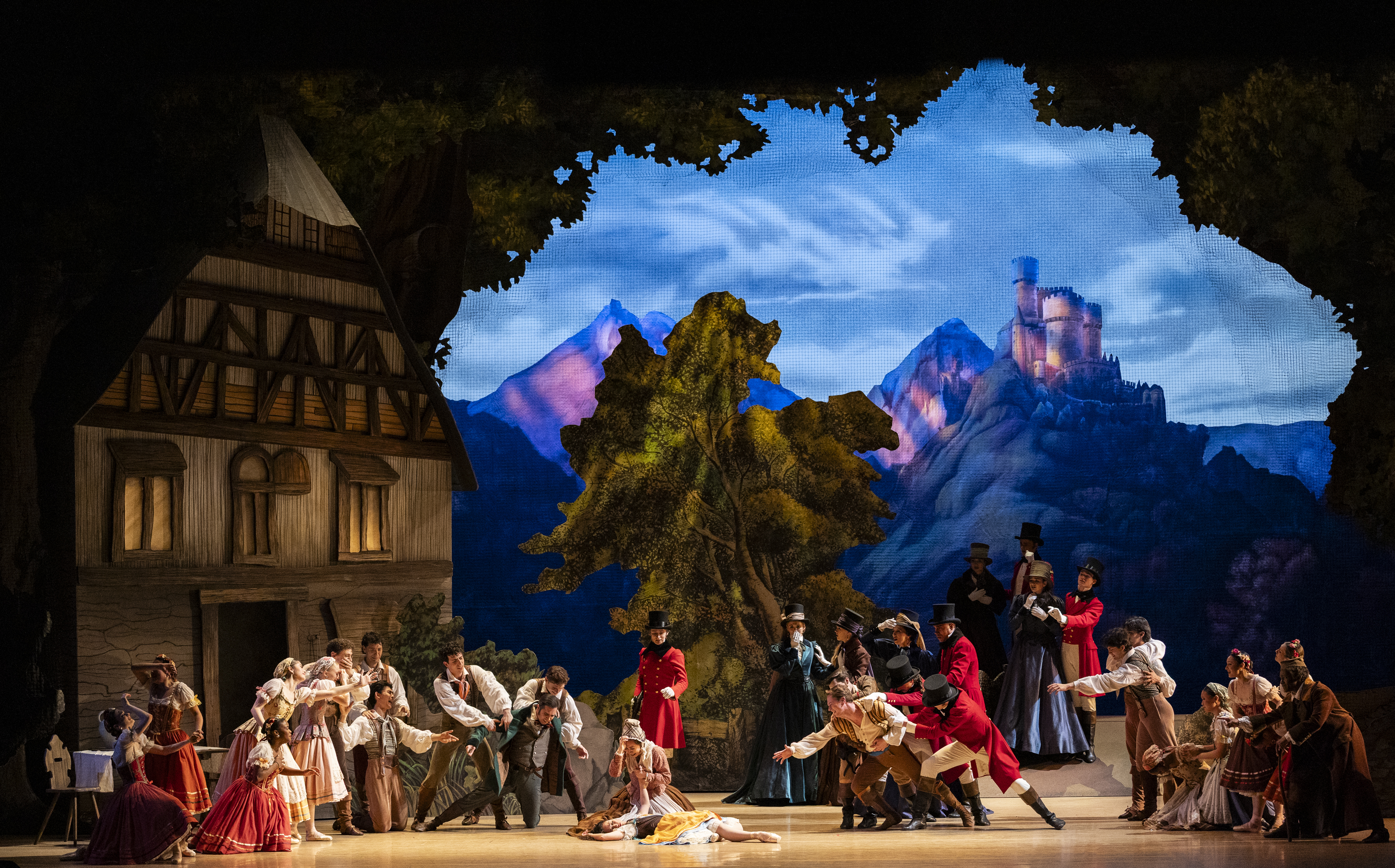
I mean, c’mon. The whole thing is a painting. Photo credit: Angela Sterling

Sure, there’s a bunch of town dances, but everyone is drunk on wine, so that’s kinda fun. Sure, the plot is a little unwieldy at first blush, but if you read the program ahead of time you’ll be fine. And, sure, a general air of properness still pervades, but in this ballet our leading lady famously releases her hair from its ballerina bun and then dances with it all loose and flowing. Sounds normal, but it’s genuinely shocking in context. 

The other thing to admire about PNB’s treatment of these older ballets is the incredible scenic design. Jerome Kaplan’s set here is no aberration; he transports us to a fairy tale German village, complete with super-lush, looming trees, thatch-roof cottages, and a castle at the top of a great hill. As I’ve noted in the past, this set isn’t just gorgeous to behold. Several aspects of its design, paired with PNB Artistic Director Peter Boal’s stage direction, brilliantly prefigure the death and ghostliness that dominate the ballet’s second half, enriching the story. 

And maybe it’s something to do with the state of the world I left behind for a few hours when I entered the auditorium, but on opening night I couldn’t stop thinking about how much this ballet, despite its age, seemed to speak to our current moment — mostly because everything about it feels on edge. 

In the opening meet-cute between Giselle and Duke Albert, the dancers perform extensions that seem to stretch each other to the limits of their limbs. In a famous moment later on, Giselle rises onto one toe and hops across the stage en pointe nearly a dozen times. The Wilis also hop around on one foot for a while. And, of course, the main characters are all on the edge of falling in love, being found out, or going mad. Then, in the second act, Giselle is on the edge of life, Albert is on the edge of death, and the rest of us are on the edge of our seats wondering how it’s all going to end. 

All of that edging, as it were, would not have been lost on French audiences at the time of production. In 1841, France was smack dab between two revolutions; the July Revolution of 1830 and the February Revolution of 1848. That first revolution kicked the old aristocracy out of power, a new bourgeois class was running things, and the peasants were — as the peasants almost always are — getting screwed. Giselle librettist Théophile Gautier no doubt saw all that, and audiences wouldn’t have been blind to the socio-political commentary resonating throughout a story of a nobleman deceiving and destroying the life of a peasant.

Living in a country that’s living on the edge in so many ways, it was hard not to see the cruelty of our wars, the stress of our income inequality, the precarity of our jobs, and the fate of our democracy in all of Giselle’s teetering.

Pacific Northwest Ballet principal dancers Sarah-Gabrielle Ryan and Kyle Davis as Giselle and Albert. Photo credit: Angela Sterling

You’d have trouble finding a better dancer to convey all the strength and determination it takes to maintain one’s balance in such world than PNB principal Sarah-Gabriel Ryan, who brought to the role her characteristic ebullience, magnetism, and technical skill. The audience swooned when she swooned, went crazy when she went crazy, and held their breath during the challenging en pointe hops and the second act’s heart-melting duet. Showing her great range as an actor and dancer, she convincingly burned warm and bright with love in Act I, and then appeared cool and weightless — though no less steely — in Act II. More, please!

As Albert, principal Kyle Davis successfully walked the fine line between unsympathetic cad and sympathetic loverboy. His Act II penance felt genuinely moving, and when he executed more than a dozen fancy foot flutters (aka entrechat sixes) in quick succession, everyone in the room was too impressed to hold his character’s sins against him. 

As Myrtha, queen of the Wilis, soloist Amanda Morgan projected a commanding and ethereal presence in equal measure, mesmerizing as Medusa. 

PNB soloist Amanda Morgan as a ghost queen ready to dance a man to death. Photo credit: Angela Sterling.

Principal dancer Clara Ruf Maldonado and soloist Kuu Sakuragi’s peasant pas de deux stunned as a study in contrasts that nonetheless paired elegantly. Maldonado moved like the melody while Sakuragi bobbed and bounced like the percussion. Together they produced one of those duets where you stop thinking about anything and just watch. Someone give Sakuragi a promotion already. 

And ten cheers for corps de ballet dancer Ryan Cardea, who played Hilarion and did an excellent job of throwing himself across the stage and falling down (on purpose). These are difficult things to do, and watching someone actually crash out (again, on purpose) provided much-needed catharsis in the middle of all the ballet’s brinksmanship. Go see it!

PNB’s Roméo et Juliette Is in Good Hands 

Reviews
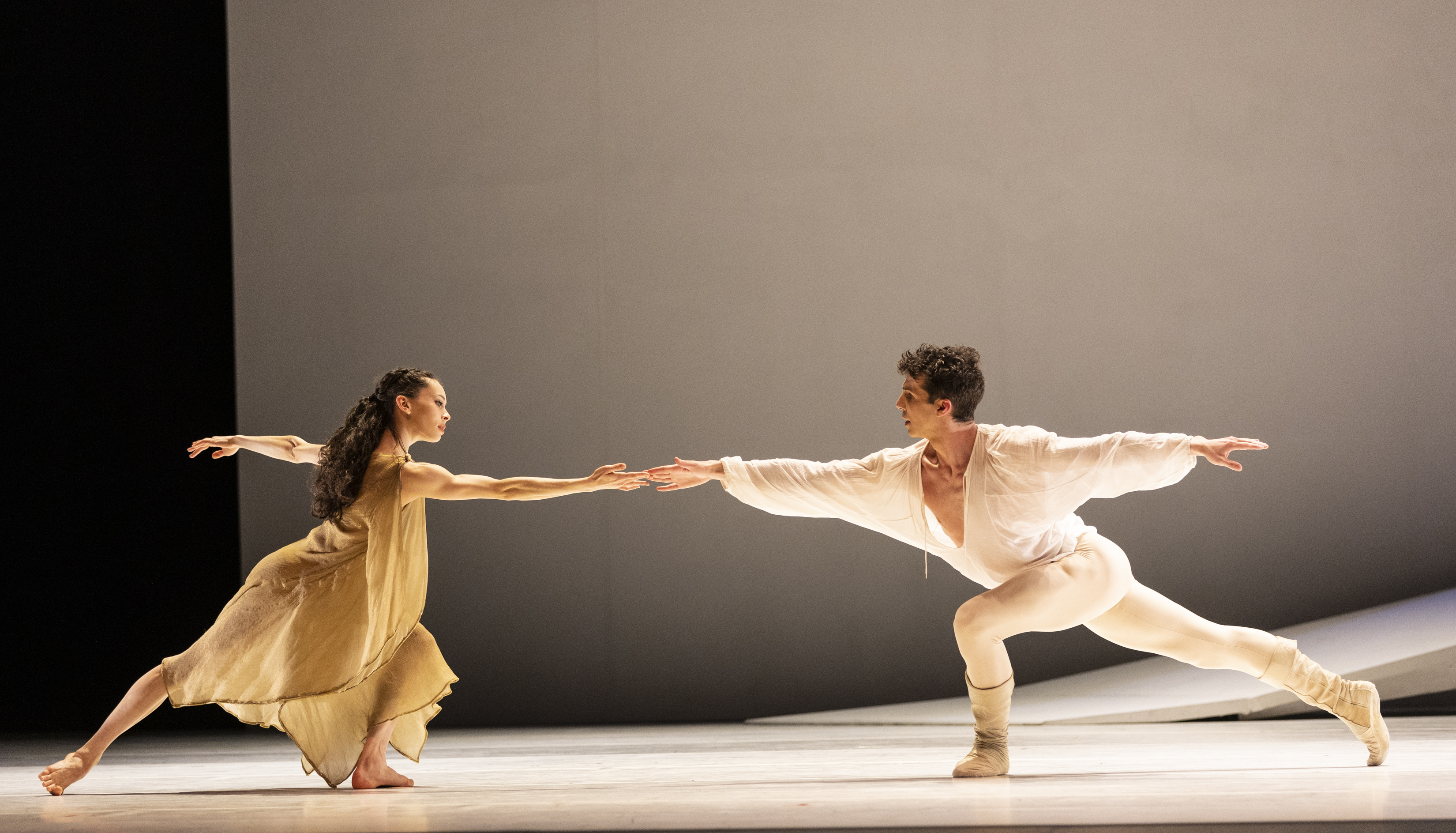
Soloist Clara Ruf Maldonado and principal Lucien Postlewaite, reaching out across the divide in their roles as Juliette and Roméo. Clean lines, people. We call these clean lines!! Photo: Angela Sterling

I’ve raved about Pacific Northwest Ballet’s production of Jean-Christophe Maillot’s Roméo et Juliette for years, but this year marked the first performance in quite a while without former PNB principal Noelani Pantastico tumbling across the stage in her signature role as a rambunctious, hopelessly romantic Juliette AND ALSO the first performance without former PNB principal James Yoichi Moore bouncing around the stage in his signature role as the bubbly and charming Roméo. Tough tights to fill. 

But my nerves settled knowing that PNB tapped Pantastico and her partner, the talented choreographer Bruno Roque, to stage the show. True to form, Pantastico’s and Roque’s direction maintained all the powers of the earlier performances — the bawdy humor, the cinematic storytelling, the endless pining, the screaming pain, and the way the ballet expresses its biggest ideas in its tiniest gestures — all while making room for the new crew of dancers to make the roles their own. 

Now THIS is some premium flouncing. (L-R Soloist Christian Poppe, Postlewaite, and Principal Kyle Davis) Photo: Angela Sterling

As a rule, I find story ballets boring—too much empty flouncing. But Maillot’s version of Shakespeare’s tale of woe, which runs at McCaw Hall through April 20, is the exception to that rule, especially in the hands of Pantastico and Roque. While many story ballets feature a lot of fluff and tutus parading for the king, this one gives us three well-structured acts layered with complexity. Act I introduces the players and commences with the fun and games. Act II sparks the romance and commences with the sex and fighting. Act III brings it on home and commences with the killings and tragedy. 

Maillot’s brilliant stagecraft shines through in a million ways. His use of textiles, for instance, subtly reinforces the theme of love as both poison and cure. On one hand, a piece of Rosaline’s dress sparks desire, The Nurse’s rag pulls Juliette onstage for the first time, and a satin sheet protects the lovers from the audience’s prying eyes. On the other hand, Roméo’s dropped jacket gives him away, a bloody rag seals Tybalt’s fate, and Juliette pulls a long, red sheet from her true love’s chest at the ballet’s tragic end. Moreover, Maillot’s focus on textiles cleverly references the “text” on which he bases the ballet—the two words, text and textile, share the Latin root meaning “woven.” Fitting, given that artists weave both stories and cloth. 

But of course, we see the stagers’ hands most readily in the quality of the performances, which were tremendous all around. 

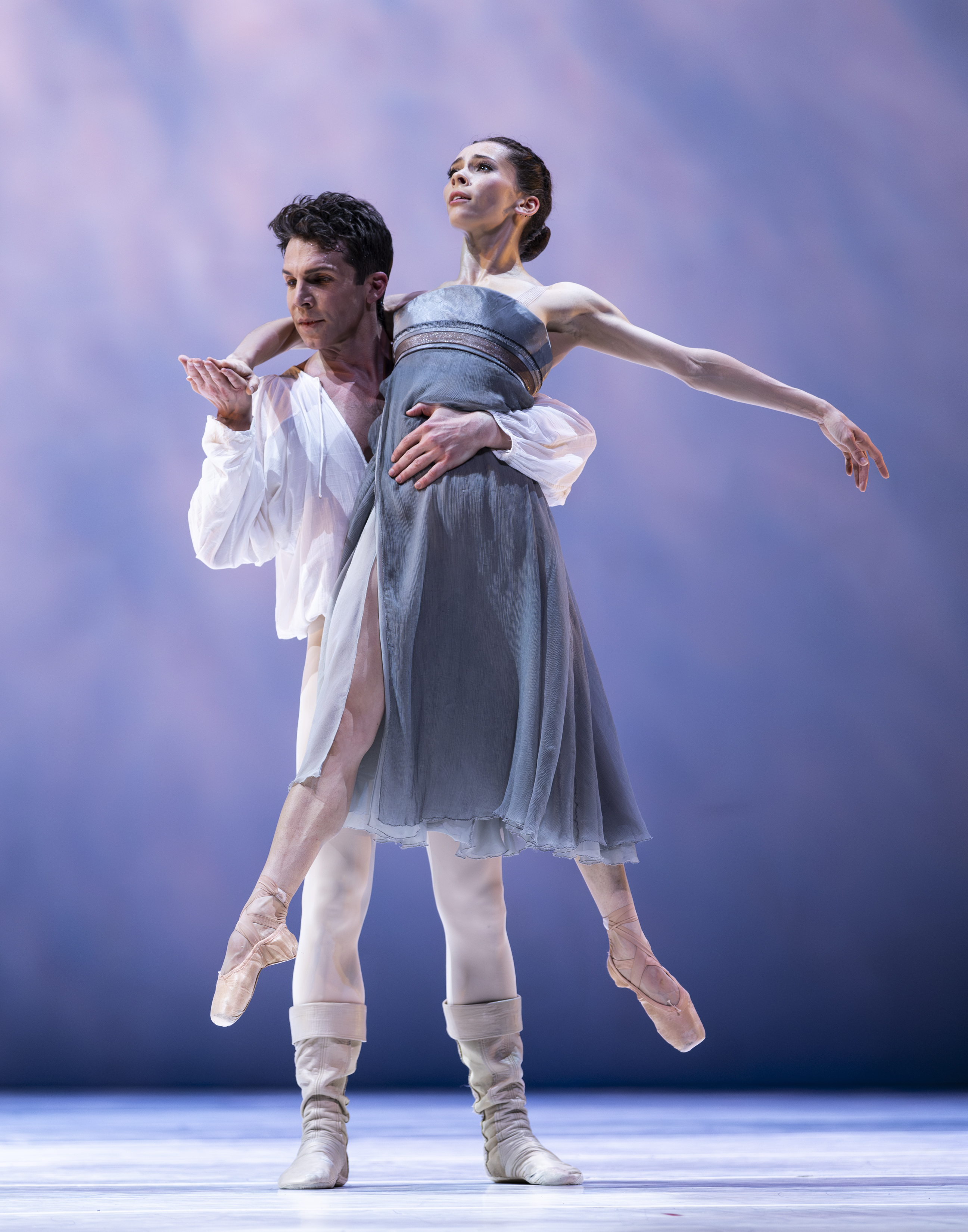
You ever just float off the ground due to the pure power of romance? Photo: Angela Sterling

Opening night reunited soloist Clara Ruf Maldonado and principal Lucien Postlewaite, who appeared to be still buzzing with the creative chemistry they developed in February’s production of Jerome Robbins’s Afternoon of a Faun. In that show, the young upstart and the veteran moved with one mind to Claude Debussy’s eponymous prelude, as if they were different fragments of the choreographer’s lackadaisically erotic, sylvan dream. 

Though Postlewaite has danced the role of Roméo with Pantastico about a million times over the years, on Friday his performance felt as fresh and as impassioned as ever. Somehow, that grown-ass, 40-year-old man can still believably transform into a lovestruck teenager panting with desire and overflowing with hormones. And yet, his skill and bearing brought a noticeable gravitas to the role. With his back against the wall on Juliette’s not-quite-yet-death-bed, he wept as if he’d known this love for ages, as if he’d lost it a thousand times. 

Maldonado picked up the torch—or, in this case, the blood-soaked sheet—from Pantastico and ran with it. Maldonado’s Juliette began the ballet all anxious knees and elbows, softened into a kind of puppy-dog love at the sight of Roméo, and projected a pain beyond her years by the end. And yet, throughout the show her technical prowess and general gumption conveyed the kind of strength and agency that Pantastico imbued into her version of the character. I can’t wait to see what Maldonado does with this tragic figure in what will very likely be a long and storied career. 

Soloist Christopher D’Ariano as Friar Laurence. His two acolytes complete the trio. Photo: Angela Sterling

Other opening night debuts include soloist Christopher D’Ariano as Friar Laurence. D’Ariano’s version of the character — the priest in black and white, the door to love and death — was appropriately grave and rigid, cutting sharp right angles through the air like a living crucifix. But he added more fluid movement that humanized his role a little more, deepening the tragedy. 

Principal dancer Elle Macy’s turn as Lady Capulet was magnetic as ever. Her slinky black dresses and her sinuous, powerful movements recalled a spider trapping her prey in a web. Despite her villain-coded character, she moved with grace and palpable grief at the death of her nephew, Tybalt, who was played with an exacting ruthlessness by principal Jonathan Batista.

Capulets, led by Principal Jonathan Batista as Tybalt, havin’ a little fun before the fall. Photo: Angela Sterling

Principal Kyle Davis also deserves a round of applause for his spirited and haughty Mercutio, and principal Sarah-Gabrielle Ryan had the crowd laughing with her comical (and deceptively difficult!) role as The Nurse. 

An ensemble piece like this one demands a strong, multi-talented company that can pair high-level technical ability with premium acting chops. With this crew, PNB yet again shows its more than up to the challenge. GO SEE IT.

And, as always: if you think the ballet is too expensive, then think again. You can pay what you can on Thursdays, and there isn’t a bad seat in the house.