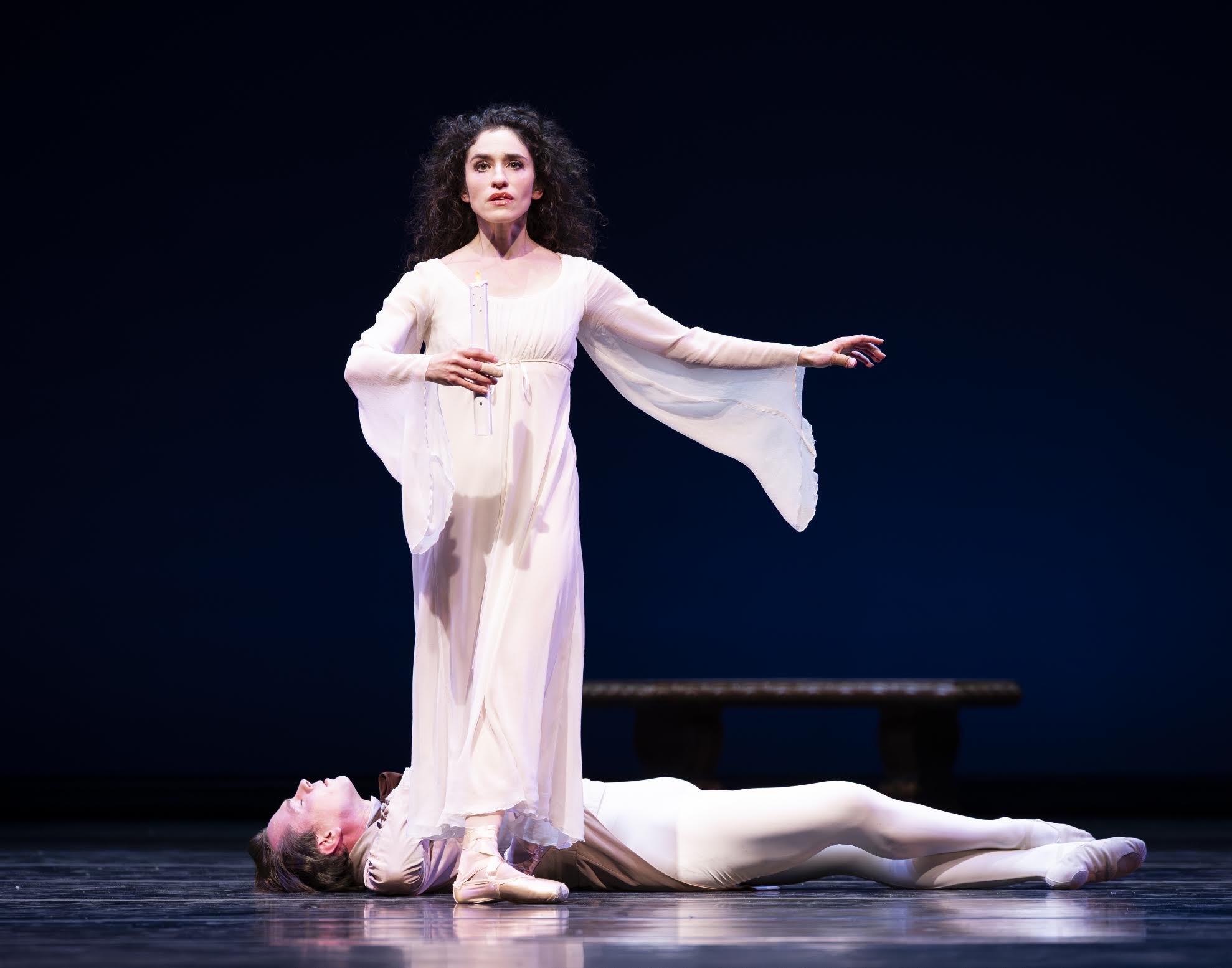
As darkness begins to fall with alarming speed each evening here in the Pacific Northwest, our region’s premier ballet company returns with the aptly named Ghost Stories, a program of four ballets featuring apparitions of all kinds: ones that haunt, ones that kill (softly), and ones that wear little else but light.
The night includes two steamy ballets from choreographer Alejandro Cerrudo, one world premiere from outgoing Pacific Northwest Ballet principal dancer Kyle Davis, and a rare Romantic number from George Balanchine.
Ghost Stories runs through November 15 at McCaw Hall, and the evening of dancing is well worth your eighty-six minutes of long-dark life.
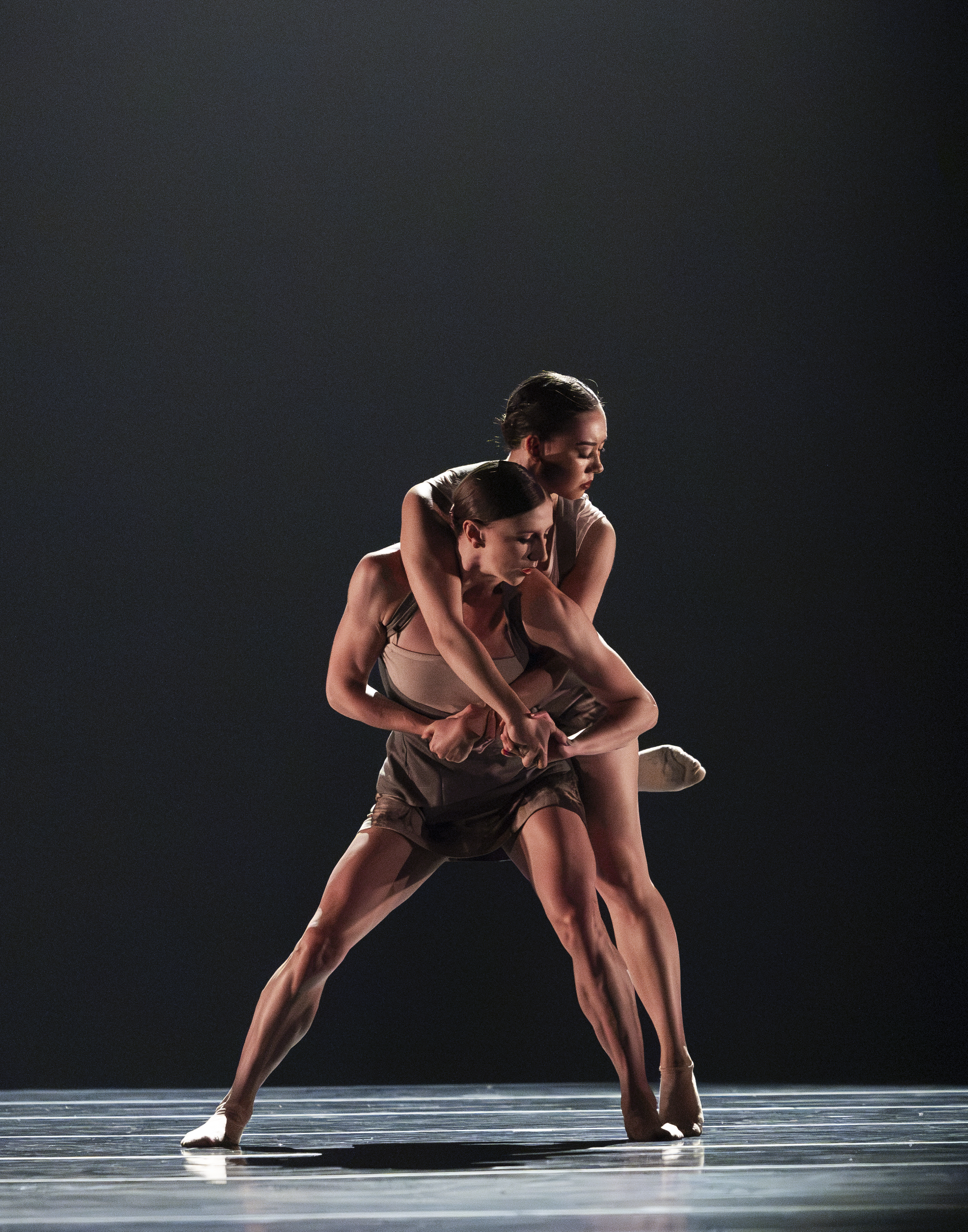
The two pieces from Cerrudo — Silent Ghost and PACOPEPEPLUTO — kick things off with the Spanish-born choreographer’s trademark mix of humor, heat, gyroscopic movement, and intimacy.
We’ve seen Silent Ghost before and we love it every time we see it. We love the dancers bathed in twilight as they twist and turn and jump on each other’s backs in Cerrudo’s always-surprising, quicksilver choreography. We love the slo-mo worm dance one dancer performs early in the ballet, and we love it when another dancer reprises the move later on. In fact, we love all the reprisals in this ballet, the way they create a sense of whole generations passing and overlapping over the course of just a few brief minutes. But most of all, we love principal dancer Dylan Wald and soloist Leah Terada performing the top-tier duet that closes out the piece.
That duet, set to a sparse, melancholy, meditative instrumental from Dustin Hamman called “Salad’s Lament,” follows a pair of somethings — lovers, friends, quantumly entangled molecules — who seem inextricably bound, each in tune with the other’s needs. As they (nearly constantly) spin in circles, they carry each other, help each other perform incredible feats (a midair split, impressive spins), wrap themselves around each other, spin each other out, hold each other, and let each other go.
You could describe nearly every ballet that way — or any romantic relationship, for that matter— but the difference here comes from Cerrudo’s mesmerizing choreography and Wald’s and Terada’s near flawless execution. The rest of the ballet moves so quickly and chaotically, but this duet finally gives us a moment to pause and zoom in on one of its relationships. Even after several minutes of exhausting, hyperspeed movement, Wald and Terada move smoothly, calmly, expressing a kind of dispassionate compassion for each other, helping each other overcome hurdles even when those hurdles are their own limbs and backs — their own selves. And the two make a good pair stylistically, with Wald’s knife-like precision juxtaposed against Terada’s more feral forms. The duet ends up retroactively enriching the ballet’s more fleeting relationships, imbuing them with its depth and complexities. All told, it’s just one of those ballets you could eat for breakfast every morning for the rest of your life.
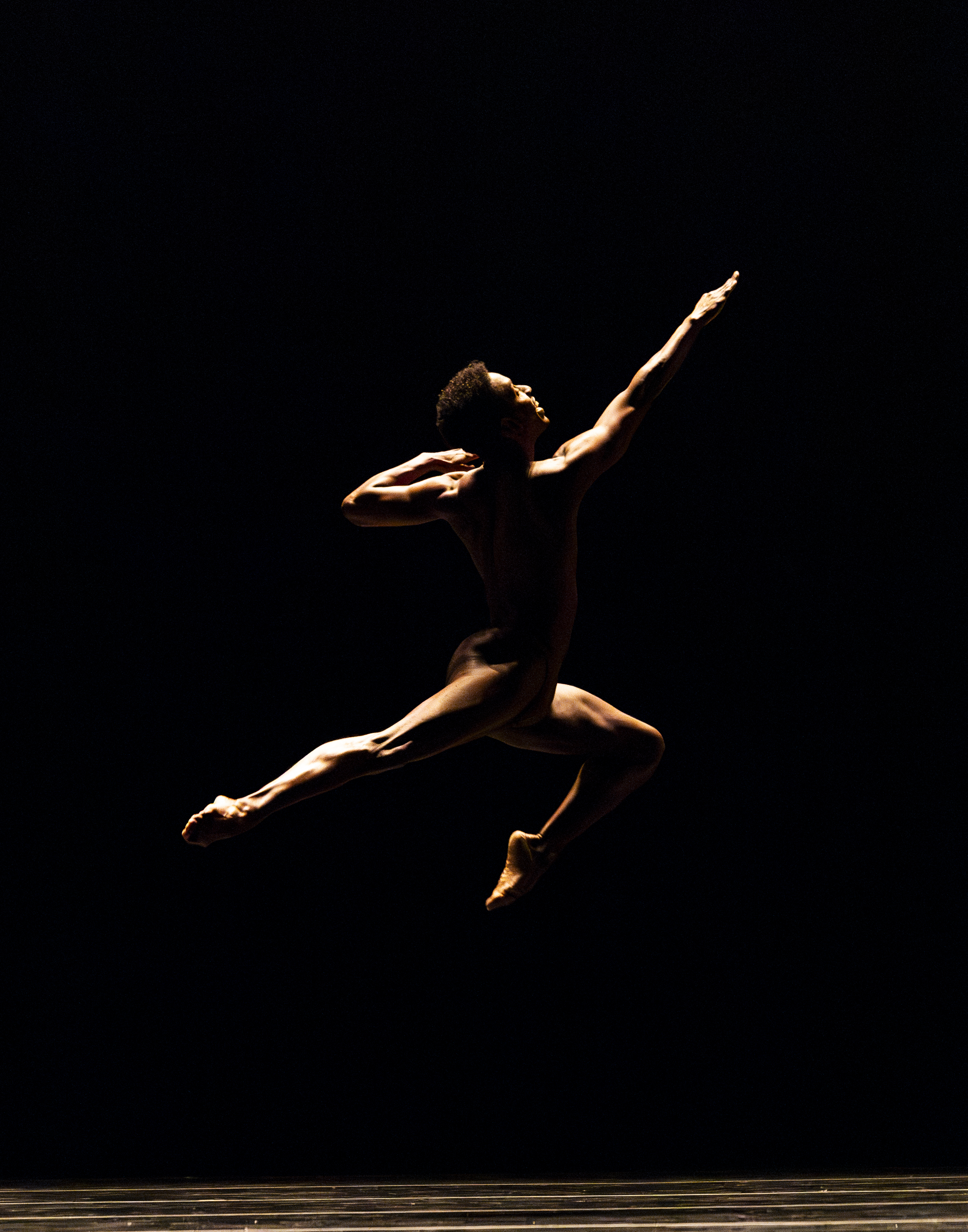
Principal dancer Jonathan Batista in PACOPEPEPLUTO. The Vitruvian Man could never. Photo credit: Angela Sterling
Speaking of eating: PACOPEPEPLUTO features three masc dancers wearing G-strings under 30 watts’ worth of light as they perform the hottest calisthenics routines anyone has ever seen to a trio of Dean Martin numbers. The ballet exudes liberation, playfulness, and the kind of goofy foolery people sometimes find charming in men, one hopes. Truly invigorating work.
Opening night featured corps de ballet dancer Noah Martzall, who exploded across the stage with power and finesse; principal dancer Christopher D’Ariano, who shook it, spun it, and hit panther-like extensions; and principal dancer Jonathan Batista, who displayed unparalleled speed and poise. All the dancers absolutely understood the assignment and passed with flying colors. In a tradition whose classical repertoire so often relegates men stiff princes who can jump really high, PACOPEPEPLUTO is a breath of fresh air.
After all that fun, the evening took a turn toward the dark and the brooding. PNB principal dancer Kyle Davis, wearing his choreographer’s hat, presented The Raven, a piece he said he’s been working on for “more than a decade.”
To help bring Edgar Allan Poe’s famous work to the stage, Davis set the ballet to a rare 1843 score from Alexander Dreyschock called Morceau de concert in C Minor, Op. 27. According to the program, pianist Frank Cooper revived the piece in the 1960s for the Festival for Neglected Romantic Music. (That’s right, the Festival for Neglected Romantic Music. We used to be a country.)
Davis wisely tapped principal dancer Sarah-Gabrielle Ryan to debut the Raven, an Odile-type femme fatale figure who serves as a metaphor for relentless grief; D’Ariano to debut the Man, a tortured poet; and principal dancer Angelica Generosa to play Lenore, the lost love who shall return ~nevermore~. (Davis also wisely did not prominently display the word “nevermore” during the performance.)
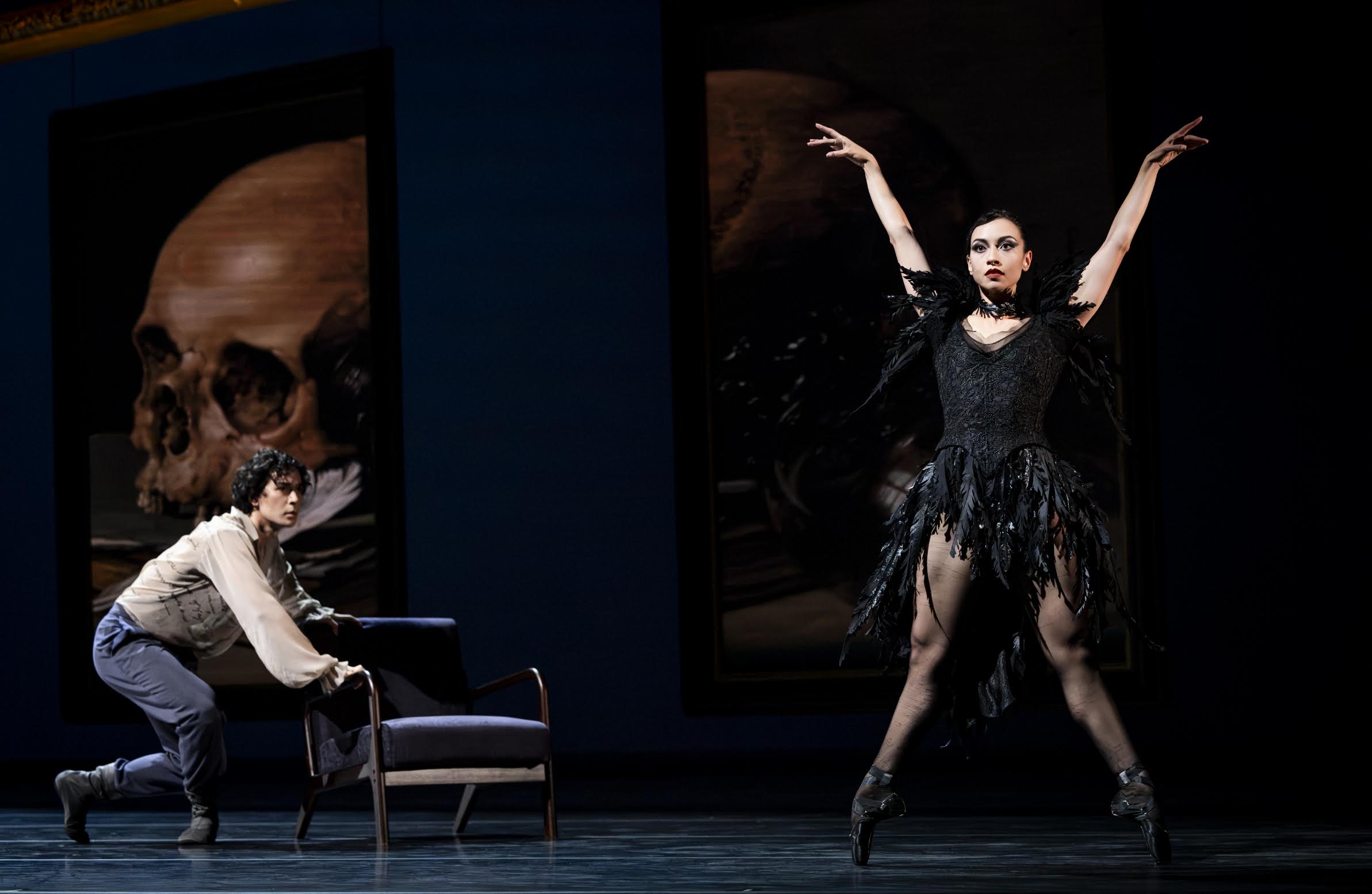
In a lush, jewel-toned interior decked out with a triptych painting of a skull (memento mori much?), the Man sat and drank with his grief. As Dreyschock’s melodramatic music kicked in, the Man pined for his lost Lenore as the Raven menaced them both while wearing a leathery, feathery tutu straight out of the Folsom Street Fair (hat tip to costume designer Emma Kingsbury).
As ever, the dancers turned in incredible performances. D’Ariano convincingly agonized around the apartment as he made an angel of Generosa with his effortless lifts. Generosa made an angel of herself with her otherworldly radiance and precision. And Ryan, who typically carries herself onstage with such sunny ebullience, showed us her darker, eviler side and clearly had a ton of fun doing it. She plucked, she preened, she sneered, she choked out the Man, she pranced around the stage like a raptor with talons for hands — and she did it all with a devilish grin.
Overall, The Raven was a well-done period piece that did justice to some nearly forgotten Romantic music. But, despite a few updated sartorial flourishes, I left for intermission asking why this music, why this story, why now?
In answer to some of those questions: The program did need a proper ghost story. With all its haunting and ghosting, The Raven certainly fit that bill.
And to add to the programming brilliance, it was fascinating to see Ryan play the vengeful Raven and then right afterward play the vengeful Coquette in Balanchine’s La Sonnambula on the same night that Davis, her husband irl, presented a tortured poet character in The Raven and then went on to play the Poet in La Sonnambula, wherein a ghostly Sleepwalker transfixed him and led to his own doom.
Seen together, the two ballets read as a pair of cautionary tales, with The Raven serving as a kind of prequel to La Sonnambula, both offering a warning about how living too long in grief, nostalgia, or fantasy can stunt or even destroy the life we’re living in the present. And if I look at The Raven as part of Davis’s farewell to an audience for whom he danced for years, opening night read like a celebratory closure, one that extolled (albeit in the negative) the power, virtue, and promise of letting go. A bittersweet au revoir!
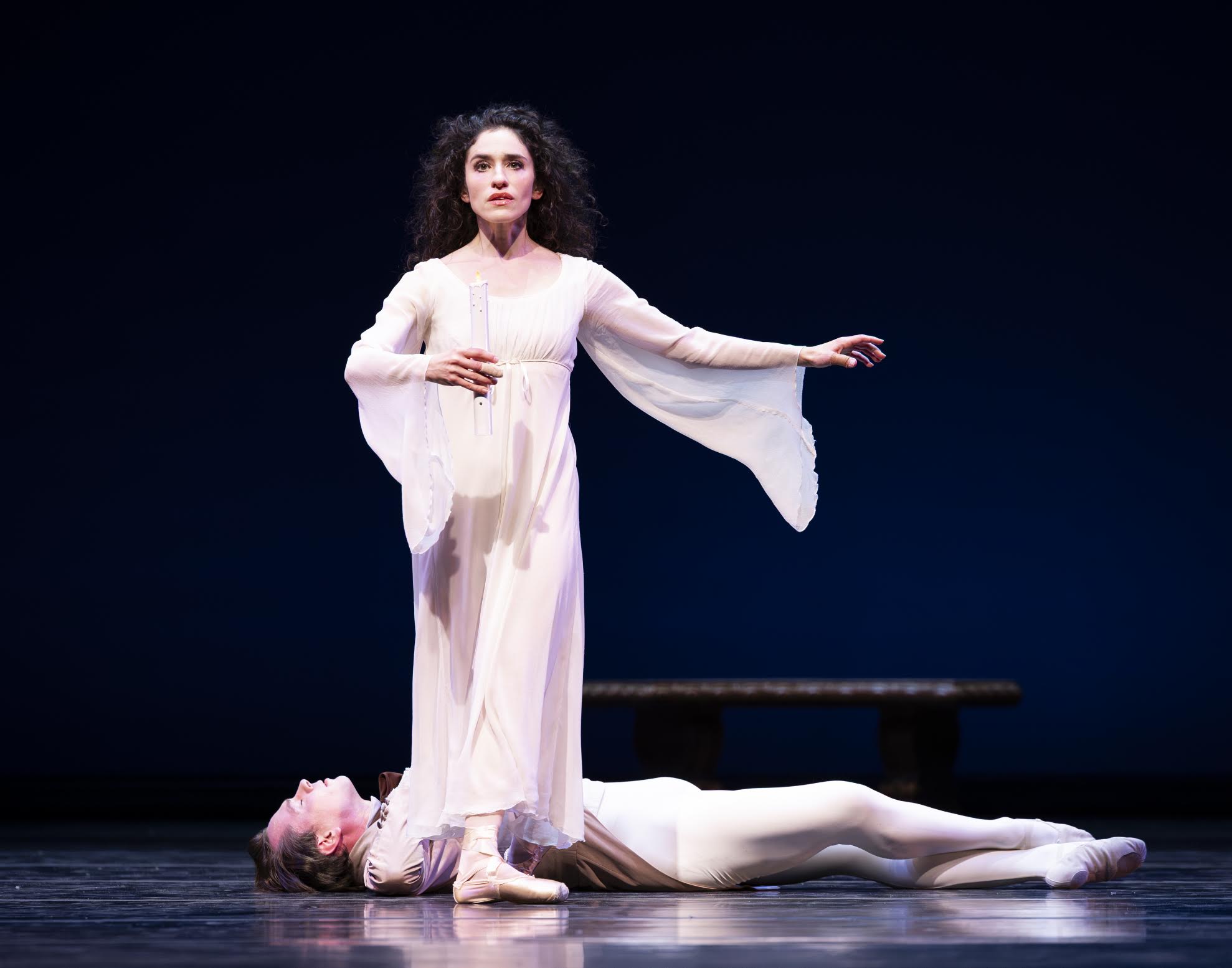
Balanchine is known for plotless, modern ballets where the dancing is the story. La Sonnambula is one of his few ballets that breaks from that mold, featuring a (more or less) traditional narrative.
We started at a party at the Baron’s house, wherein everyone was all dressed up in Christine Joly de Lotbiniere’s gorgeous, richly hued, darkly iridescent costumes. As a bunch of dancers danced for the Baron (played on opening night by soloist Dammiel Cruz-Garrido), the Poet (played by Davis) fell in love with the Coquette (played by Ryan). But then the Poet stumbled upon the Sleepwalker (played by principal dancer Leta Biasucci). When the Coquette caught the Poet trying to seduce the Sleepwalker, she narc’ed on him and then the Baron killed him.
Everything outside the Sleepwalker’s scene was well-executed but just kind of fine, with the exception of the Harlequin dance, in which soloist Kuu Sakuragi killed it yet again, pairing stunning acrobatics and cute little antics that had the audience member next to me cackling like a witch.
The part with the Sleepwalker felt like a completely different ballet in the best way, anchored by Biasucci’s incredible performance. With the softest imaginable footfalls she floated across the stage like a phantom, looking truly freaky as she chaperoned a big Ebenezer Scrooge candle with her eyes wide shut. The scene mesmerized and enchanted the audience just like the Sleepwalker mesmerized and enchanted the Poet, and I immediately wanted to cut away the rest of the ballet and just watch the Sleepwalker scene again.
Biasucci has been on a gold-star run AT LEAST ever since her turn as Cinderella in 2025. She’s doing everything a Balanchine star is supposed to do: she’s got off-the-charts athletics, she moves without making a sound, and she simply becomes music onstage. But she’s also got the acting chops. When she’s up there, the stage seems to melt away and we enter whatever world she’s in. I think we need to be talking more about this as a society. We need to be seeing television news segments. Big profiles. Medium-sized profiles. Face on a bus wrap. That kind of thing. This Thanksgiving holiday, we need to be sitting down and discussing Biasucci’s performances with our families.
See what I mean this weekend. Get your tickets here.

