
It hardly seems fair that Pacific Northwest Ballet dancers could be good at anything besides breathing new life into the old repertoire and shaping the roles of the canon to come, but the company’s Next Step program, which ran over the weekend, very much proved otherwise.
Next Step offered a handful of PNB dancers the chance to try their hand at creating an original performance piece, allowing them to draw on the company’s Professional Division students for onstage talent.
It was a win-win-win situation. The show gave the company’s farm team real experience building new work with a budding choreographer; it gave the dancers the opportunity to start exploring one of the career paths available to them once they hang up their pointe shoes; and it spoiled audiences with six brand-new ballets sprung from the minds of the country’s top performers.
The dancer-choreographers certainly rose to the challenge, producing a little kaleidoscope of ballets small enough to fit in your pocket, aesthetically diverse enough to keep you on your toes, and rich enough to stick with you long after the dancers took their bows.
Given the workshop nature of the program—which PNB reinforced this year by staging the performances in a practice studio space inside the Phelps Center rather than at On the Boards or in McCaw Hall as they had in previous years—what follows is not so much a full-fledged review of the show so much as my notes, impressions, and daydreams from the performance, though regular readers may find a distinction there without much difference.
Hues of You — Ashton Edwards
PNB soloist Ashton Edwards’s Hues of You started with a full cast of dancers gathered onstage looking like one big lotus flower. When some spacious electronic music kicked on, the dancers scattered like windblown petals and formed small groups. The movement that followed unfolded like the dialogue in a Robert Altman film: compelling fragments that nevertheless cohered into a whole world.
Edwards juxtaposed angular and curvilinear movement, large and small scales, and intimate and more public-feeling moments to give shape to this impressionistic work. The little duets and trios featured ambitious contortions executed with varying degrees of success, though when they landed they really landed—as when one dancer appeared to fly on the back of another. Overall, a very pretty thing to look at.
For the end of time — Luther Demyer
Edwards’s soft, flowing number yielded to this dark, stark, and remarkable piece from soloist Luther Demyer.
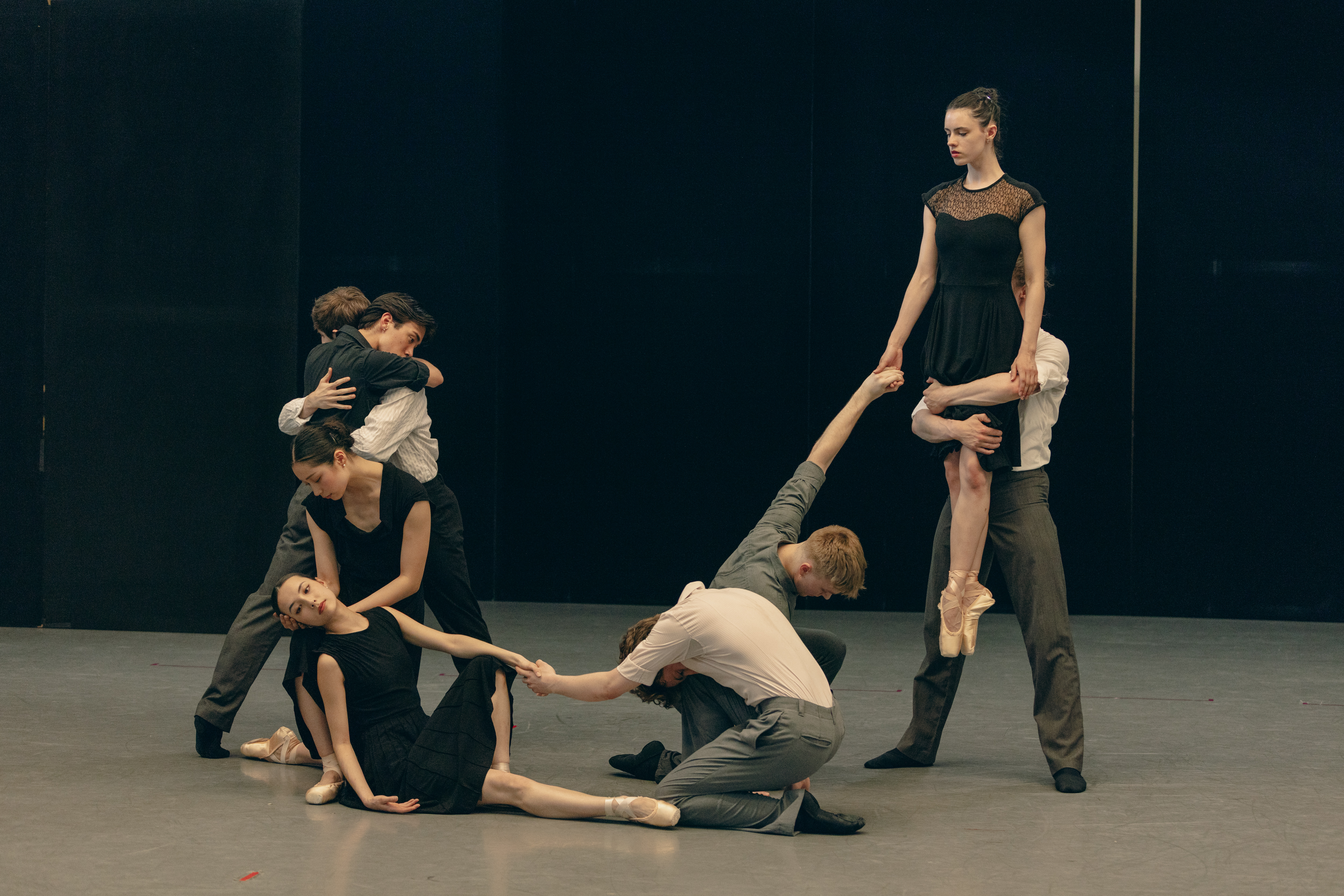
Demyer dressed his dancers in formal wear and arranged them as if they were figures in a Renaissance funeral painting. Some dancers sadly embraced, others held their heads in their hands, and one held another up pietà-style. As sad violin and piano music played, the dancers came to life and performed slow, acrobatic movement that culminated in a mass rapture followed by a mass resurrection. A pretty spot-on interpretation of how I feel reading the morning paper.
In its staging and tone, For the end of time strongly recalled PNB resident choreographer Jessica Lang’s Let Me Mingle Tears with Thee, serving as a kind of amuse-bouche for PNB’s next production, All Lang, which opens May 29.
In general, the vision was clear, the Professional Division dancers were on their game, and the piece seemed pretty close to being finished. Good stuff.
To Echo — Elle Macy and Dylan Wald
Smart, mesmerizing, and simply beautiful to behold. To Echo, from PNB principals Macy and Wald, ranked among the evening’s top contributions, thanks to the ballet’s sophisticated structures, its moving score, and the quality of its performances.
In the opening, a dancer hatched into silence. Then the music kicked in — warm piano minimalism from Michael Wall, who played (and whistled!) the score live. Then the rest of the dancers began to hatch, launching into the world with lots of big-arm extensions and clean, bold lines — but all done quite lightly.
At first they all ran back and forth, east to west, across the stage on separate tracks, meeting each other seemingly at random and dancing briefly together before parting ways. It was an elegant metaphor, a reminder that we’re all just passing through, touching each other briefly before moving on.
At one point the dancers broke the east–west structure, formed a horizontal line across the stage, and then started heading north–south. Some faced the future and some turned around to face the past; as they all advanced, some took steps forward and some took steps back, creating another metaphorically resonant moment that spoke to some of us in the middle of our lives who are doing just fine right now, actually, thanks, now let’s just move on.
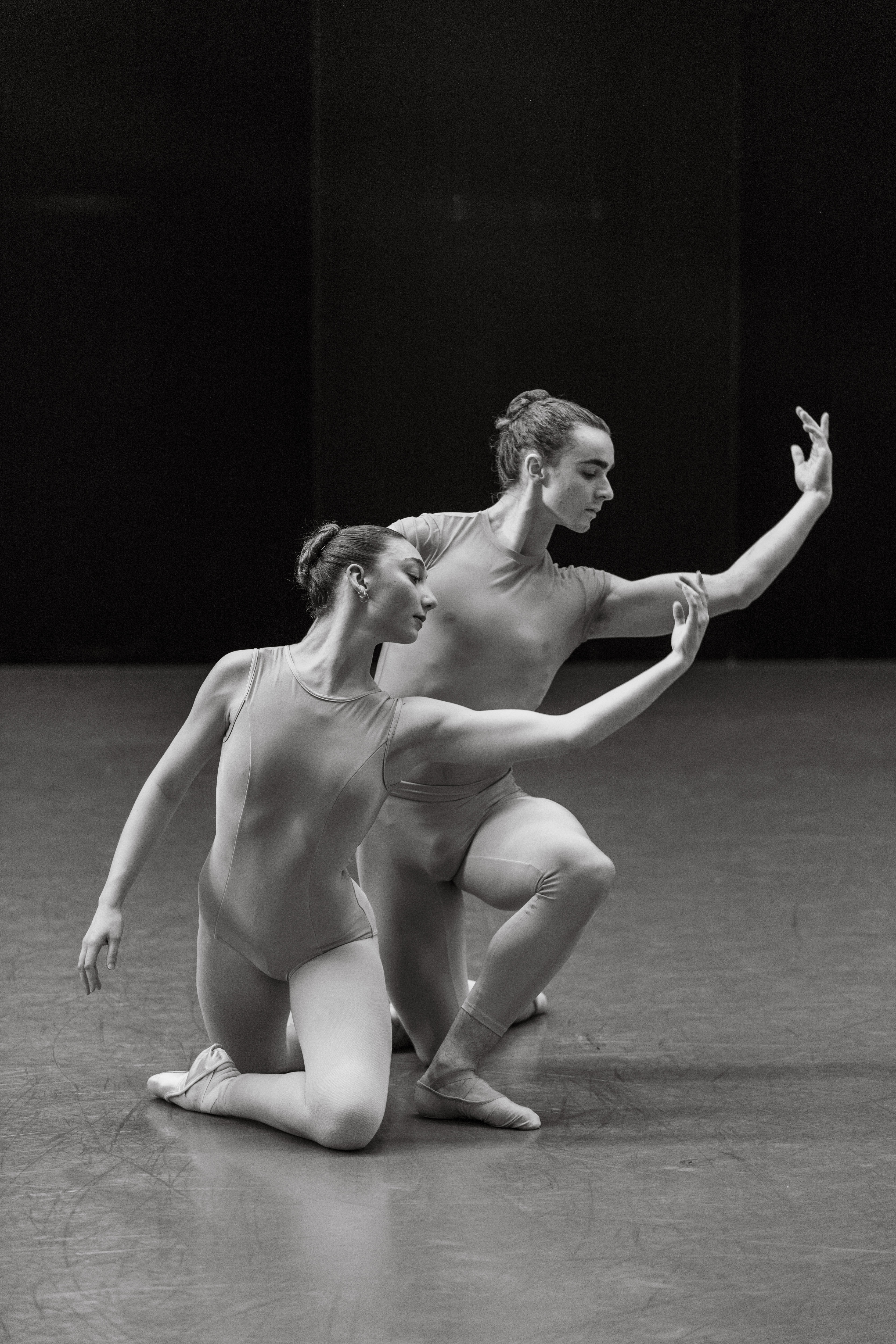
This grid structure eventually dissolved into a couple of lovely, well-paced duets—one romantic and soaring, the other more platonic and yoga-intensive. PD dancers Zoe Paris-Carter and Hollis Serson deserved flowers for their performance in that closing duet: really controlled, clean, thoughtful movement. I immediately wanted to watch it again.
from colors of sun and steel — Leah Terada
Soloist Leah Terada generally excels in all roles, though her artistry tends to reach its fullest expression in wildly contemporary work that bucks ballet’s more uptight conventions, so it was no surprise to see her turn in the moodiest, freakiest, most unhinged piece of the program.
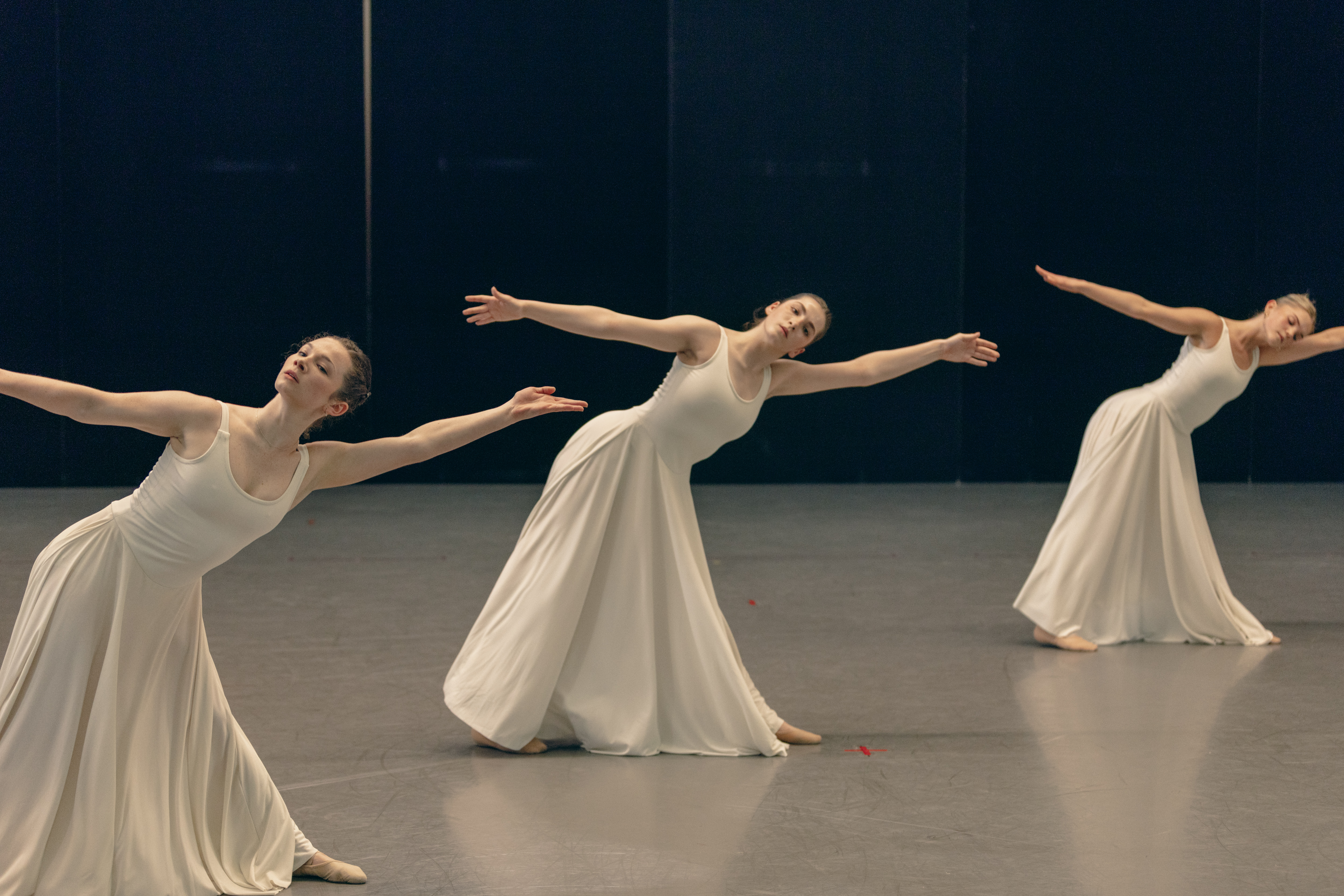
Three dancers in white dresses moved across the stage swiftly, precisely, and unpredictably as warm, plucky music piped through the speakers. The movement vocabularies came from all over the place—insects, Indian classical dance, horror-film body language (at one point the dancers were seated with legs extended, somehow scooting forward while dragging their hands behind their backs)—but it all looked cohesive.
The relationships between the dancers shifted over the course of the performance, but not in any linear way: sometimes two dancers excluded the third, sometimes they all moved independently, sometimes they supported one another. The word that came to mind most often was conjuring. These dancers appeared to be conjuring something, which seemed fitting given the piece’s final push, where all three dancers seemed to lose themselves in some kind of hyper-kinetic ecstasy, like three witches circling a cauldron in a dark wood. It was enthralling and a little alarming.
Special shout-out to PD students Daisy Bayard, Lyra McDonald, and Hollis Serson, who seemed to thrive in this intense, improvisational environment. Extra points to Bayard, who led the following ballet with aplomb despite its wildly different movement vocabulary. She has range, folks!
Vignettes — Lily Wills
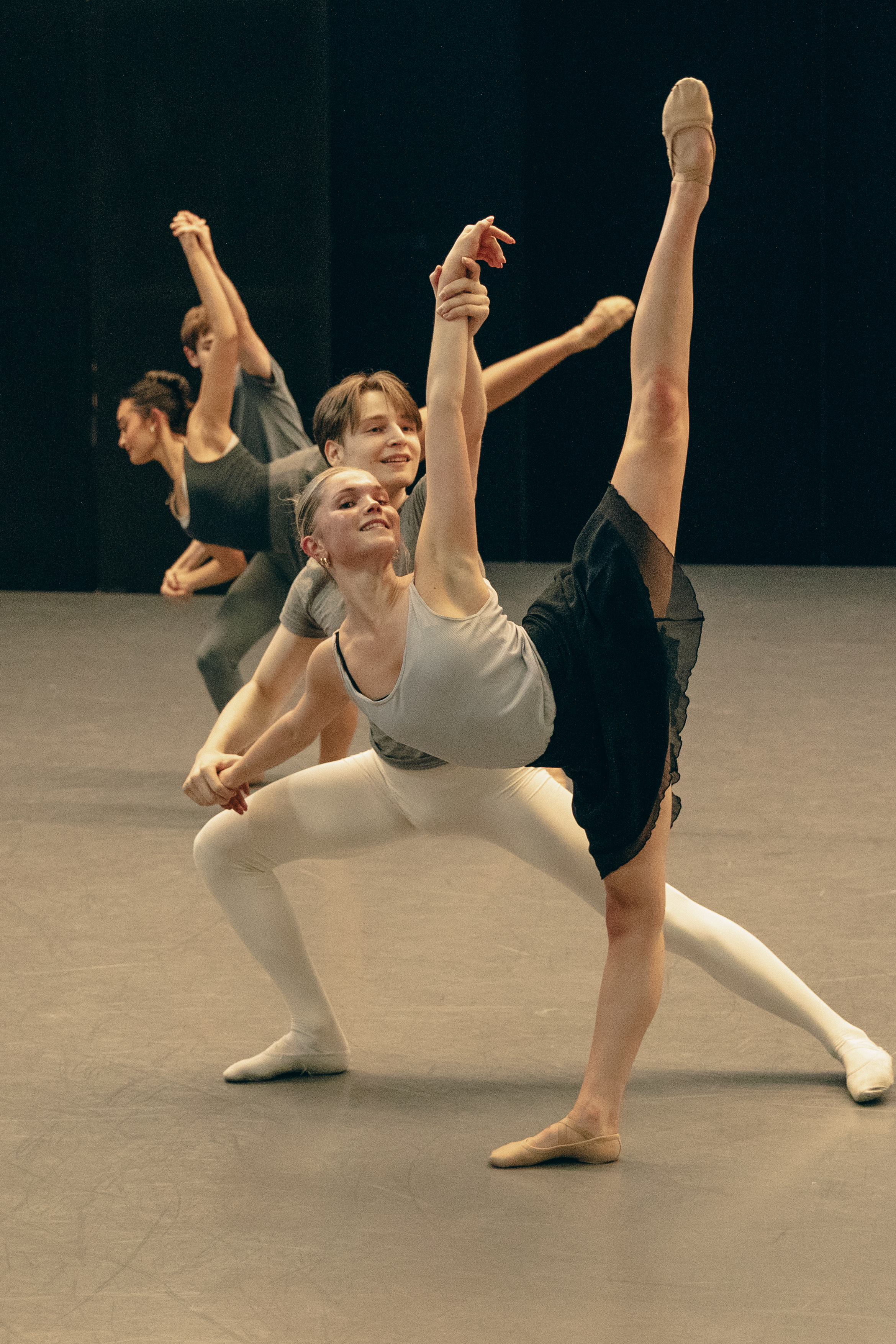
Corps de ballet member Lily Wills’s Vignettes was fun, funny, well-structured, and endearing.
The first of the ballet’s four movements looked like a real hoedown, drawing on swing and country-western line dancing (“where everything is so democratic and cool”).
Then a brief love story unfolded: a solo man wearing black and white danced with a woman in white and another in black, suggesting a divided affection. PD dancer Gustav Frautschi stood out here with some solid peacocking, spins, and leaps.
The third movement flipped the script with a flirtatious duet in which the woman played coy and ultimately fluttered off on her own; both dancers—Max Howard and Josie Yang—showed a tremendous amount of promise.
The final movement seemed to place the audience in a bedroom, where two women performed incredibly complex tumbling in the spirit of good old-fashioned sisterhood. From hoedowns to heartaches to the safety net of sisterhood, Wills covered a lot of ground in these movements and stuck every landing. I could have watched a couple more vignettes in this vein.
Push — Zsilas Michael Hughes
I love poems about poems, movies about movies, and ballets about ballets, and PNB Corps de ballet member and all-around dance phenom Zsilas Michael Hughes’s Push fit squarely in that mold, seeming to be about the Next Step process itself.
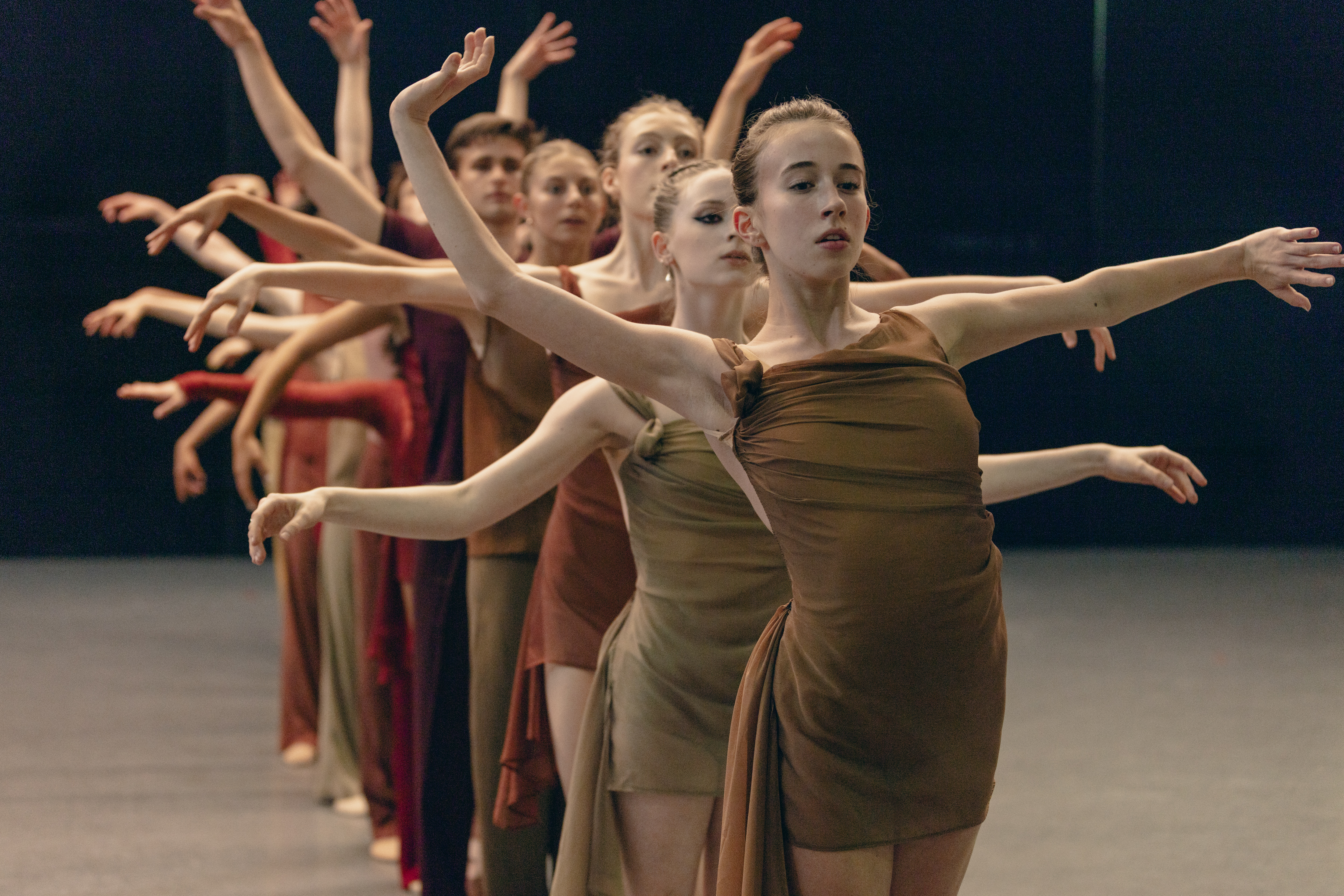
Hughes drew on the full cast, dressed them all in maroon and earth tones, and had them dance for each other as much as they danced for the audience. To be sure, the dancers presented to the house often enough, but overall it felt as though the audience were flies on the wall of some early-1980s New York City loft, watching a group of dancers hang out, try to impress each other, and, well “push” themselves.
Like Macy and Wald, Hughes also laid bare the geometry of the work, starting with a straight line of dancers across the stage while a few stepped forward individually to strut their stuff. Then the dancers arranged themselves in vertical lines on the left and right sides of the stage as others took turns stepping into the center to show off.
The whole thing ended in a dance party—a perfect conclusion to a thrilling evening, one that showed how these dancers perform just as well backstage as they do onstage.

