
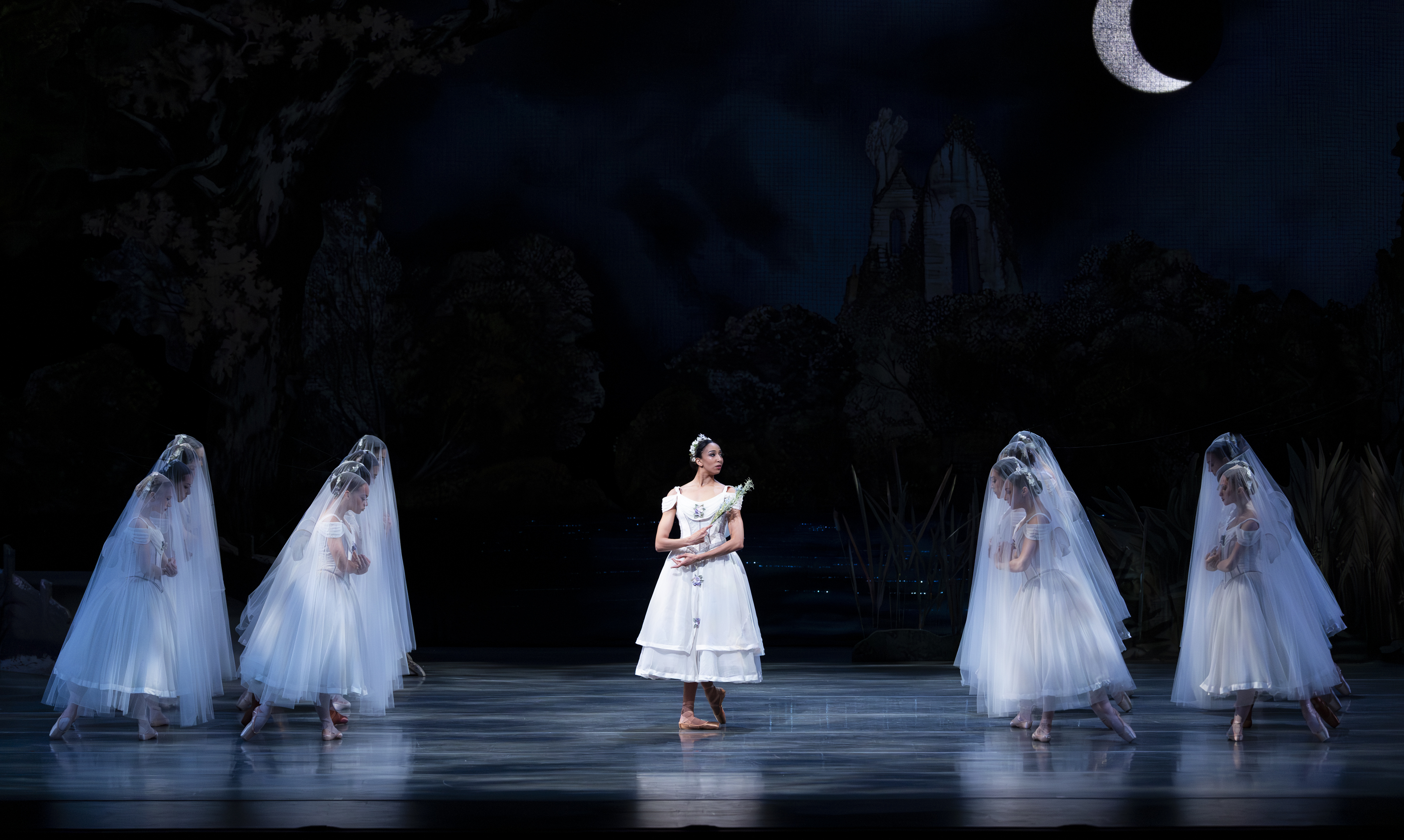
Despite my well-documented and admittedly somewhat tedious aversion to old, floofy, fairy tale ballets, I’m glad I decided to overrule my bias, march into McCaw Hall, order my customary pint of sparkling wine, and join an audience all giddy and anxious to see Pacific Northwest Ballet’s Giselle, an evening-length production that runs through April 19.
After all, like anything created by French Romantics in 1841, the narrative is deeply weird.
In brief: A Duke named Albert abandons his fiancée, dresses in peasant drag, and saunters down to a nearby village to seduce a sprightly young woman named Giselle. Another nobleman named Hilarion intervenes and tries his hand at taking Giselle’s, but she rejects his advances. When Giselle ultimately learns of Albert’s true identity, she goes nutso and then dies. End of Act I.
In Act II, we enter a misandrist’s dream: a phalanx of jilted bride-ghosts called “Wilis” haunt a cemetery soaked in moonlight, waiting for unsuspecting men to stumble by so they can dance them to death. When Albert visits the cemetery to pay his respects, the Wilis confront him and commence with their deadly jigs.
Though Giselle bears many story ballet elements I find a little wearisome — idle dance numbers, a somewhat unwieldy plot, a general air of properness — PNB’s production subverts them all in interesting ways.
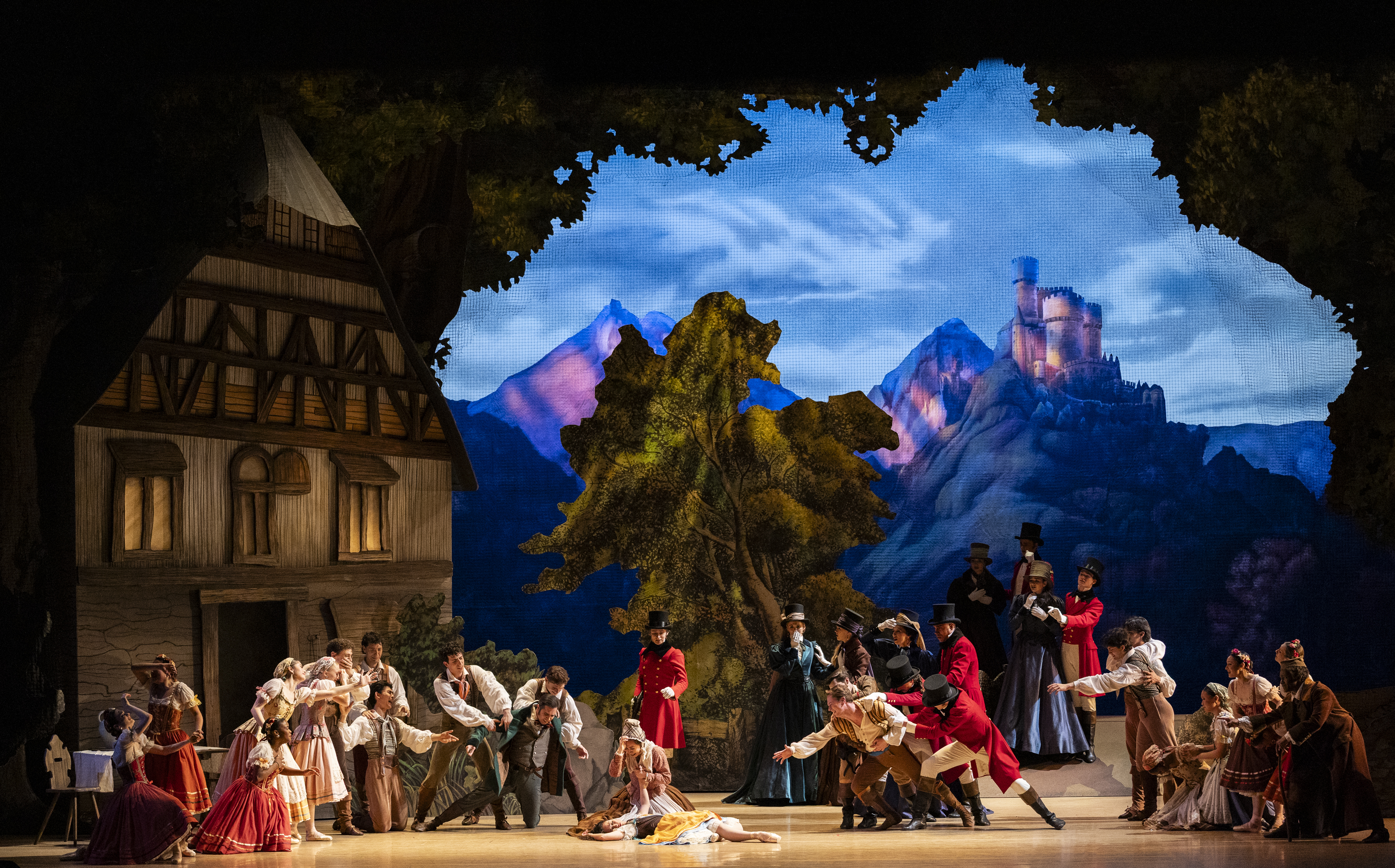
Sure, there’s a bunch of town dances, but everyone is drunk on wine, so that’s kinda fun. Sure, the plot is a little unwieldy at first blush, but if you read the program ahead of time you’ll be fine. And, sure, a general air of properness still pervades, but in this ballet our leading lady famously releases her hair from its ballerina bun and then dances with it all loose and flowing. Sounds normal, but it’s genuinely shocking in context.
The other thing to admire about PNB’s treatment of these older ballets is the incredible scenic design. Jerome Kaplan’s set here is no aberration; he transports us to a fairy tale German village, complete with super-lush, looming trees, thatch-roof cottages, and a castle at the top of a great hill. As I’ve noted in the past, this set isn’t just gorgeous to behold. Several aspects of its design, paired with PNB Artistic Director Peter Boal’s stage direction, brilliantly prefigure the death and ghostliness that dominate the ballet’s second half, enriching the story.
And maybe it’s something to do with the state of the world I left behind for a few hours when I entered the auditorium, but on opening night I couldn’t stop thinking about how much this ballet, despite its age, seemed to speak to our current moment — mostly because everything about it feels on edge.
In the opening meet-cute between Giselle and Duke Albert, the dancers perform extensions that seem to stretch each other to the limits of their limbs. In a famous moment later on, Giselle rises onto one toe and hops across the stage en pointe nearly a dozen times. The Wilis also hop around on one foot for a while. And, of course, the main characters are all on the edge of falling in love, being found out, or going mad. Then, in the second act, Giselle is on the edge of life, Albert is on the edge of death, and the rest of us are on the edge of our seats wondering how it’s all going to end.
All of that edging, as it were, would not have been lost on French audiences at the time of production. In 1841, France was smack dab between two revolutions; the July Revolution of 1830 and the February Revolution of 1848. That first revolution kicked the old aristocracy out of power, a new bourgeois class was running things, and the peasants were — as the peasants almost always are — getting screwed. Giselle librettist Théophile Gautier no doubt saw all that, and audiences wouldn’t have been blind to the socio-political commentary resonating throughout a story of a nobleman deceiving and destroying the life of a peasant.
Living in a country that’s living on the edge in so many ways, it was hard not to see the cruelty of our wars, the stress of our income inequality, the precarity of our jobs, and the fate of our democracy in all of Giselle’s teetering.
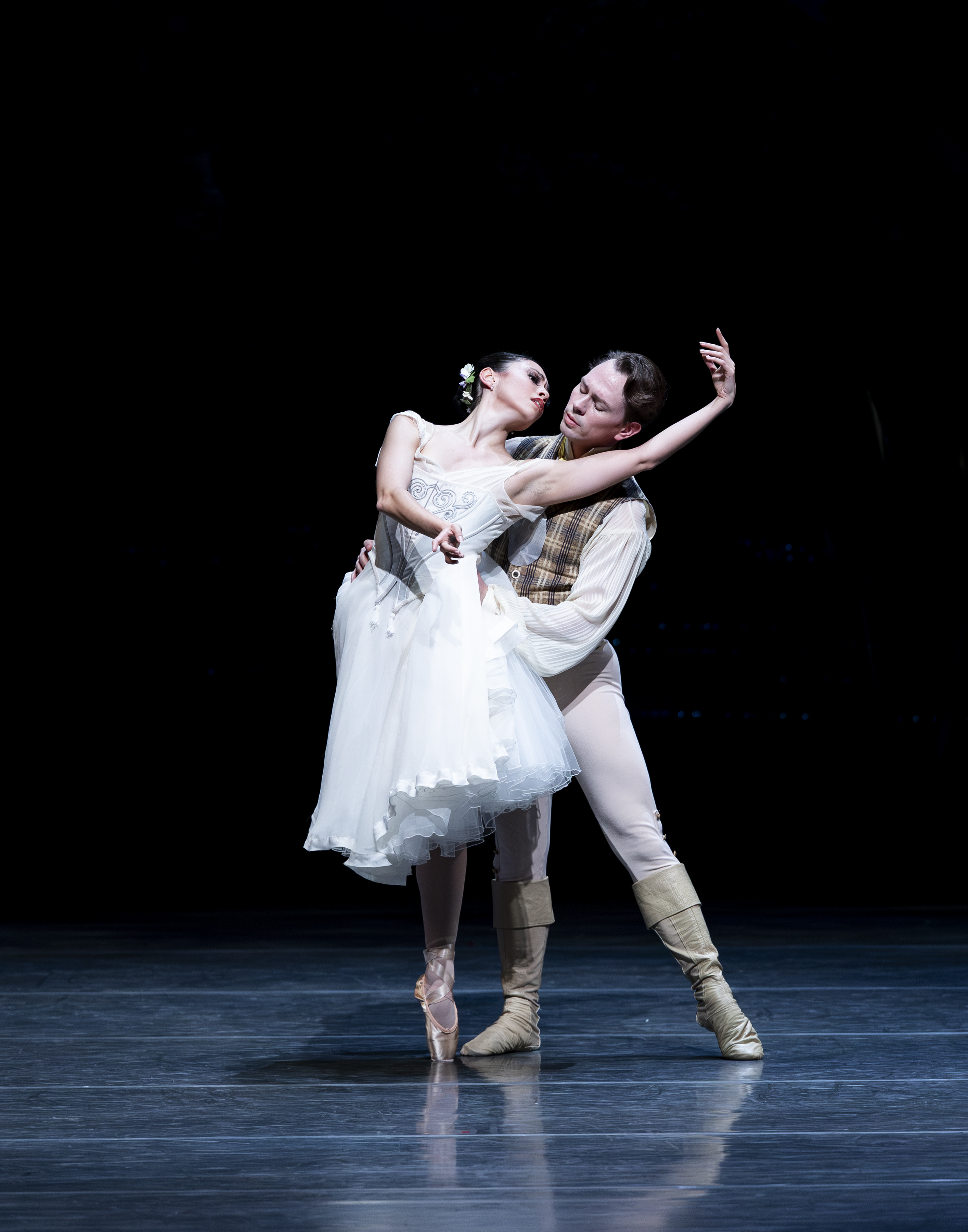
You’d have trouble finding a better dancer to convey all the strength and determination it takes to maintain one’s balance in such world than PNB principal Sarah-Gabriel Ryan, who brought to the role her characteristic ebullience, magnetism, and technical skill. The audience swooned when she swooned, went crazy when she went crazy, and held their breath during the challenging en pointe hops and the second act’s heart-melting duet. Showing her great range as an actor and dancer, she convincingly burned warm and bright with love in Act I, and then appeared cool and weightless — though no less steely — in Act II. More, please!
As Albert, principal Kyle Davis successfully walked the fine line between unsympathetic cad and sympathetic loverboy. His Act II penance felt genuinely moving, and when he executed more than a dozen fancy foot flutters (aka entrechat sixes) in quick succession, everyone in the room was too impressed to hold his character’s sins against him.
As Myrtha, queen of the Wilis, soloist Amanda Morgan projected a commanding and ethereal presence in equal measure, mesmerizing as Medusa.
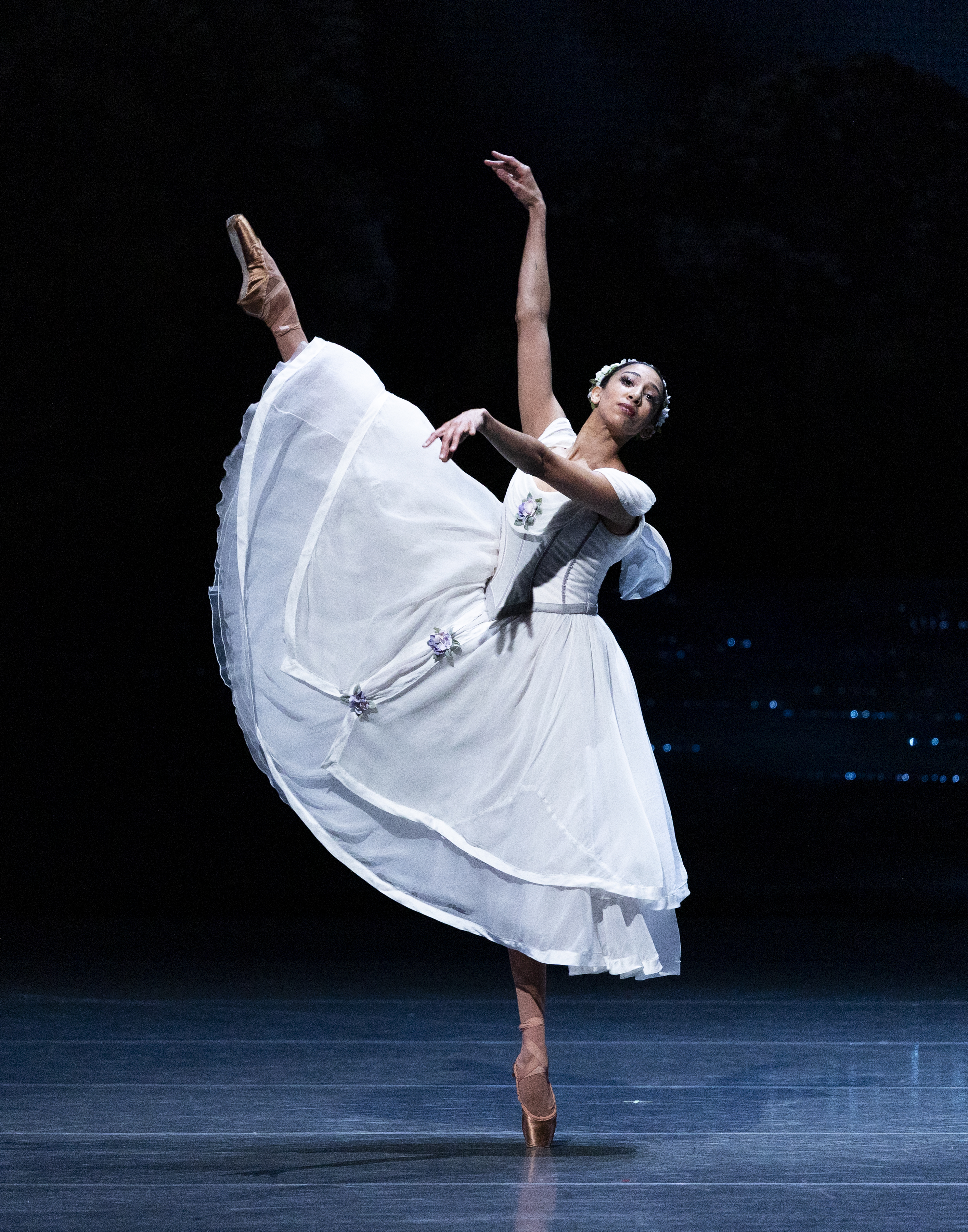
Principal dancer Clara Ruf Maldonado and soloist Kuu Sakuragi’s peasant pas de deux stunned as a study in contrasts that nonetheless paired elegantly. Maldonado moved like the melody while Sakuragi bobbed and bounced like the percussion. Together they produced one of those duets where you stop thinking about anything and just watch. Someone give Sakuragi a promotion already.
And ten cheers for corps de ballet dancer Ryan Cardea, who played Hilarion and did an excellent job of throwing himself across the stage and falling down (on purpose). These are difficult things to do, and watching someone actually crash out (again, on purpose) provided much-needed catharsis in the middle of all the ballet’s brinksmanship. Go see it!

