Rhythm Nation > Alienation 

Uncategorized
Welcome to The System. Photo Credit: Angela Sterling

Anybody else feeling kinda weird about large portions of the world talking to a robot at their job all day, reaching for robot-curated content as an escape, and then trying to touch grass or reconnect with real living things but feeling like you can’t quite find life’s socket, as it were? Plus also feeling a little mopey because it’s dark a lot now? Well then, Pacific Northwest Ballet has just the program for you. 

Like your most toxic, codependent friend, PNB’s In the Upper Room poisons you with its own loneliness and alienation, and then, just as you begin to fall into the void, it wrenches you from your doldrums with fun costumes and lots of aerobic exercise. 

The program’s trio of ballets, which runs at McCaw Hall through Nov 16, includes a timely world premiere from PNB dancer-choreographers Amanda Morgan and Christopher D’Ariano called AfterTime, Dani Rowe’s heartbreaking/breathtaking The Window, and Twyla Tharp’s breathless In the Upper Room, a mid-1980s romp supercharged by Philip Glass’s manic minimalism. If the first two-thirds of this program make you feel like you want to to slink back to your apartment for a spliff and a 45-minute short-form video binge, the last third will make you want to swing dance on the moon. 

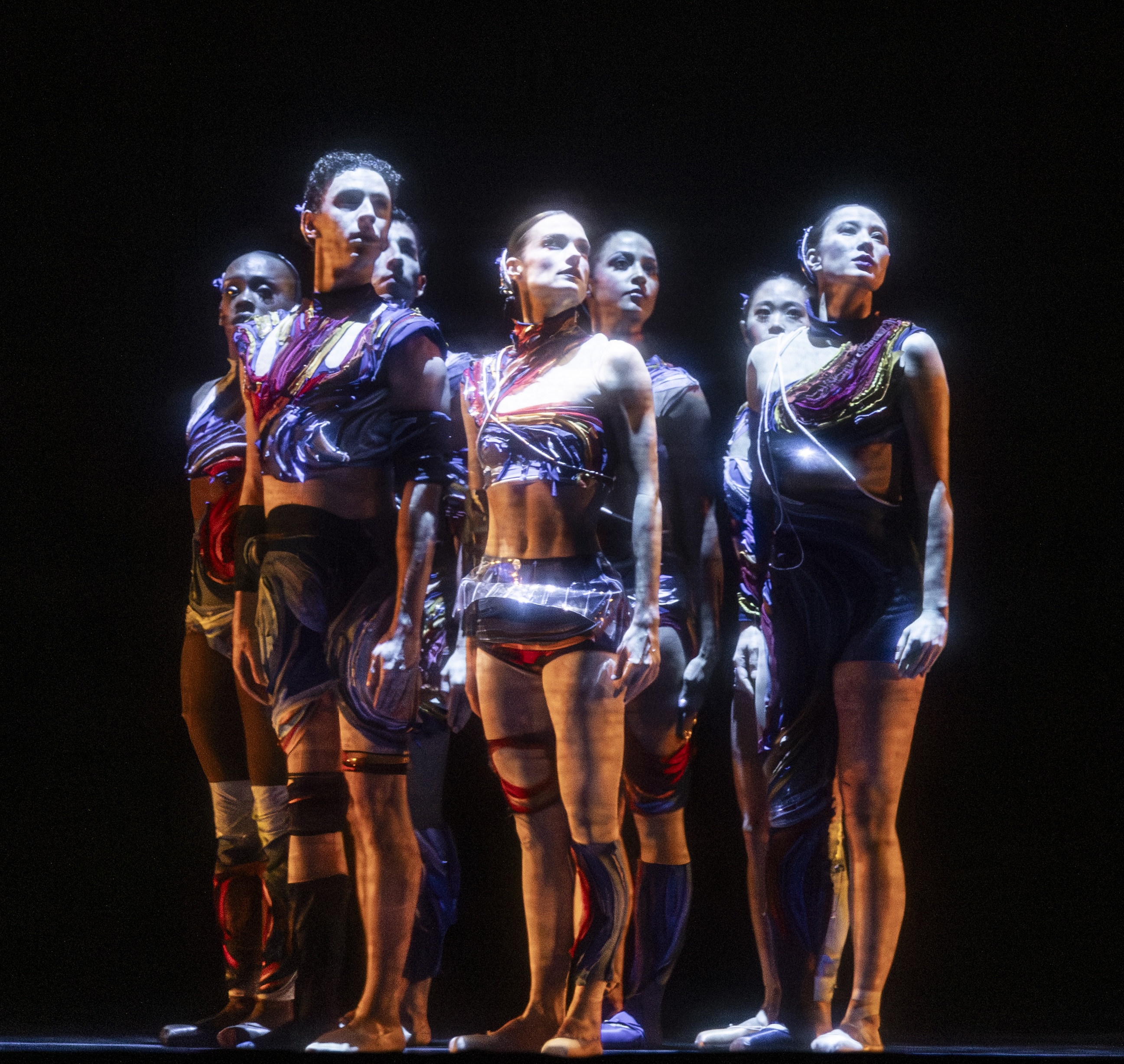
Morgan and D’Ariano’s AfterTime presents a multimedia ballet featuring otherworldly costuming from Janelle Abbott, dazzling light work from Reed Nakayama, transportive film and projection design from Henry Wurtz, propulsive (and cleverly arranged) music from Fiona Stocks-Lyon and Thomas Nickell, and engrossing postmodern aesthetics with a big ol’ modernist heart beating at its center that nevertheless speaks to our increasingly post-human contemporary moment. (Haha sorry.) 

Cannot get over these costumes from Janelle Abbott. Photo Credit: Angela Sterling.

The ballet pits two protagonists (performed on Friday night by soloist Leah Terada and corps de ballet member Connor Horton) against a group of dancers called The System. The design elements establish a dichotomy between the human and the digital worlds; the protagonists wear organic and flowing sand-colored (I think) costumes and move smoothly and rhythmically across a blank stage to string music, whereas The System dancers travel in grid patterns, dance in robotic and elegantly spastic ways to updated ‘80s video game music, and wear costumes that look like chewed-up space suits. 

The protagonists’ world is stark. The System’s world is bright, colorful, seductive. After setting up this contrast, Morgan and D’Ariano’s ballet asks: “Okay, what would happen if your best friend-lover-confidante fell into a video game called AfterTime and maybe got stuck in there forever?”  

On the way to answering this question, Morgan and D’Ariano seem to tap movement vocabularies familiar to PNB audiences—and, of course, familiar to themselves as PNB dancers. At one point, The System dancers form an organic mass reminiscent of Crystal Pite’s The Seasons’ Canon. At the ballet’s heart-wrenching climax, the separated protagonists attempt to connect across the digital scrim in a dynamic duet inflected with the language of martial arts and classical ballet, reminiscent of moments from Price Suddarth’s Dawn Patrol. In the protagonists’ early entanglements, I saw reference to Alejandro Cerrudo’s gyroscopic choreography. And I even saw a little Giselle in the way The System attempts to dance the protagonist to death. 

Though I won’t reveal the fate of the protagonists here, these are the fragments the AfterTime choreographers shore against the ruin of our contemporary, LLM robot life, where the “content” production methods are similar — we, like the LLM robots, use old art to create new art — but where a very important difference lies in the intentions of the entity behind the curtain. I think of something the late David Foster Wallace once said in an interview with a real person: “It’s gonna get easier and easier, and more and more convenient, and more and more pleasurable, to be alone with images on a screen, given to us by people who do not love us but want our money. Which is all right. In low doses, right? But if that’s the basic main staple of your diet, you’re gonna die. In a meaningful way, you’re going to die.” 


As for the standout performances — the whole PNB crew killed it, with Terada very much in her element, which was good to see after an injury. Horton matched her vim and vigor and expressive capacities, which was especially impressive given that he filled in that night. And newly promoted soloist Ashton Edwards thrilled in a duet where they leapt around their partner like loosed lightning. 

Despite all this noodling, I feel like I need to watch this ballet five or seven more times, and hopefully I’ll have the opportunity to. 

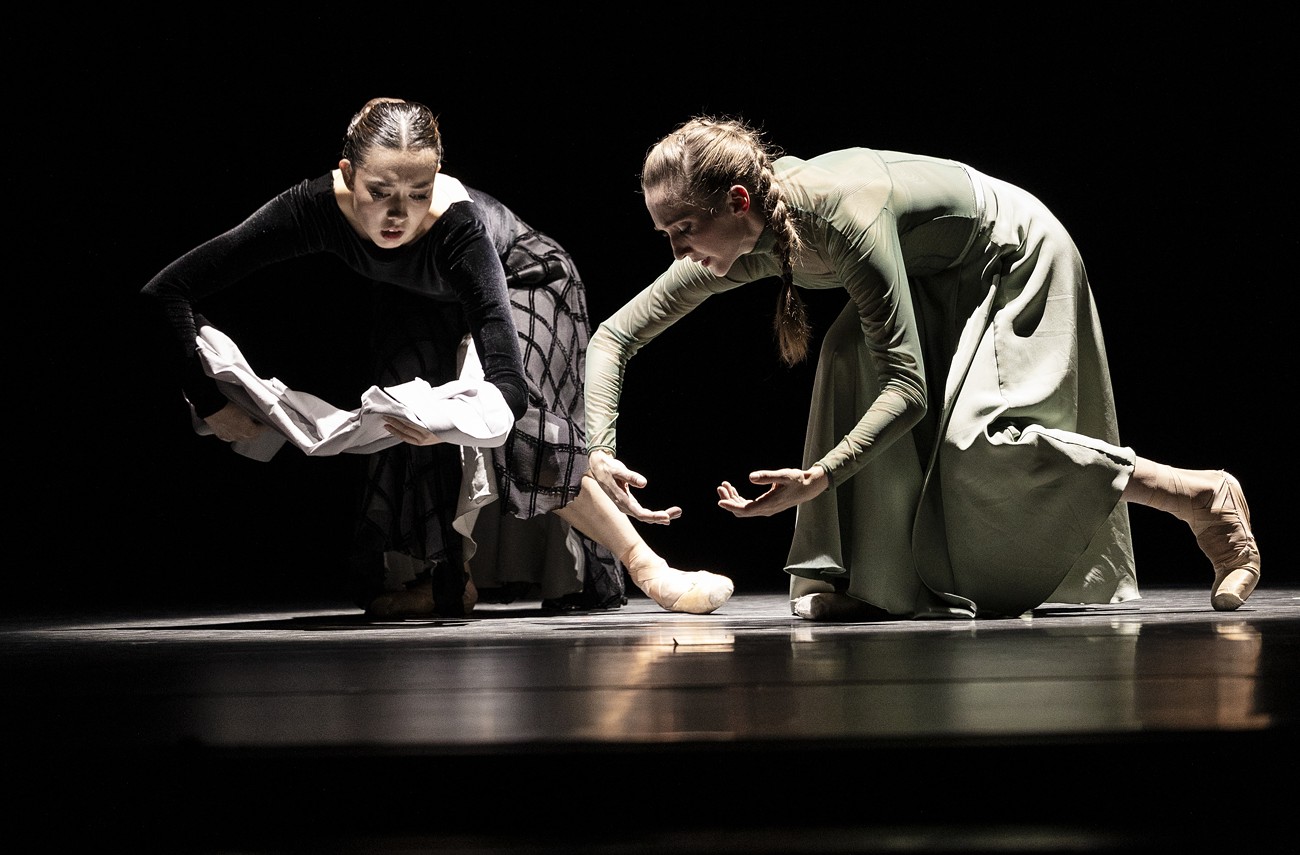
(L-R) Corps de ballet dancer Melisa Guilliams and principal dancer Elizabeth Murphy sharing a loss. Photo Credit: Angela Sterling

The program then turns to Dani Rowe’s The Window, delving deeper into themes of connected disconnectedness. PNB audiences first saw this incredible work in 2023, and I hope it’s fast becoming local canon. The ballet features three characters: The Woman and The Man, who live out a little romantic life in an apartment, and The Watcher, who lives vicariously through The Woman from an apartment across the way. 

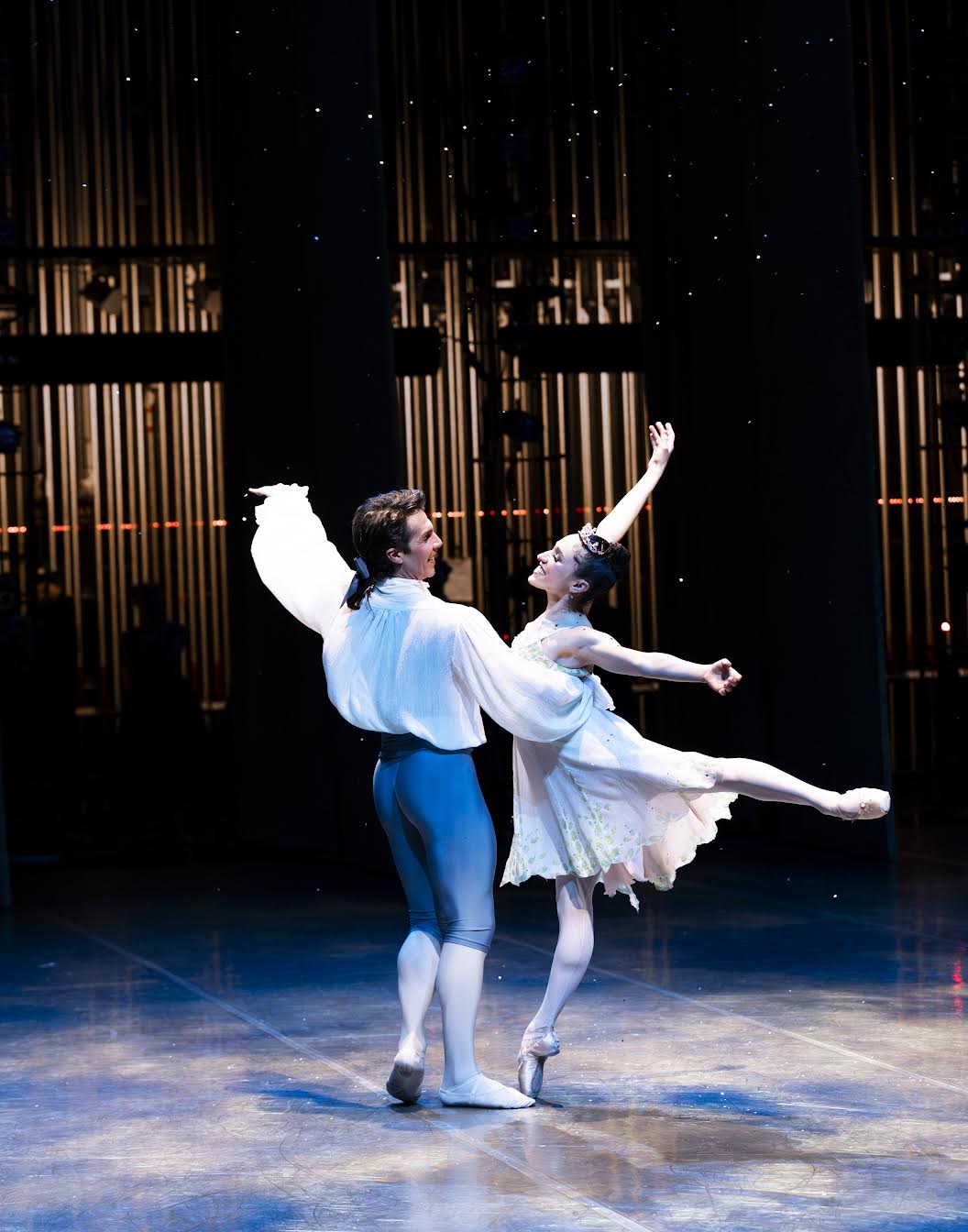
Corps de ballet dancer Melisa Guilliams and principal dancer Elizabeth Murphy reprised their roles as The Watcher and the Woman, respectively, and if any other dancers have performed those roles then I don’t want to hear about it. Guilliams and Murphy are made to play these parts. Despite their difference in age and experience, the two move so similarly—soft steel, athletic elegance. Their twinning styles compound the ballet’s tragedy; suggesting that they share not only a loss in the death of The Man (played on Friday by D’Ariano, who turned in a stellar performance as a princely boyfriend, executing effortless lifts and extensions) but also the loss of what could have been a fruitful friendship. 

We begin in prison. Photo Credit: Angela Sterling

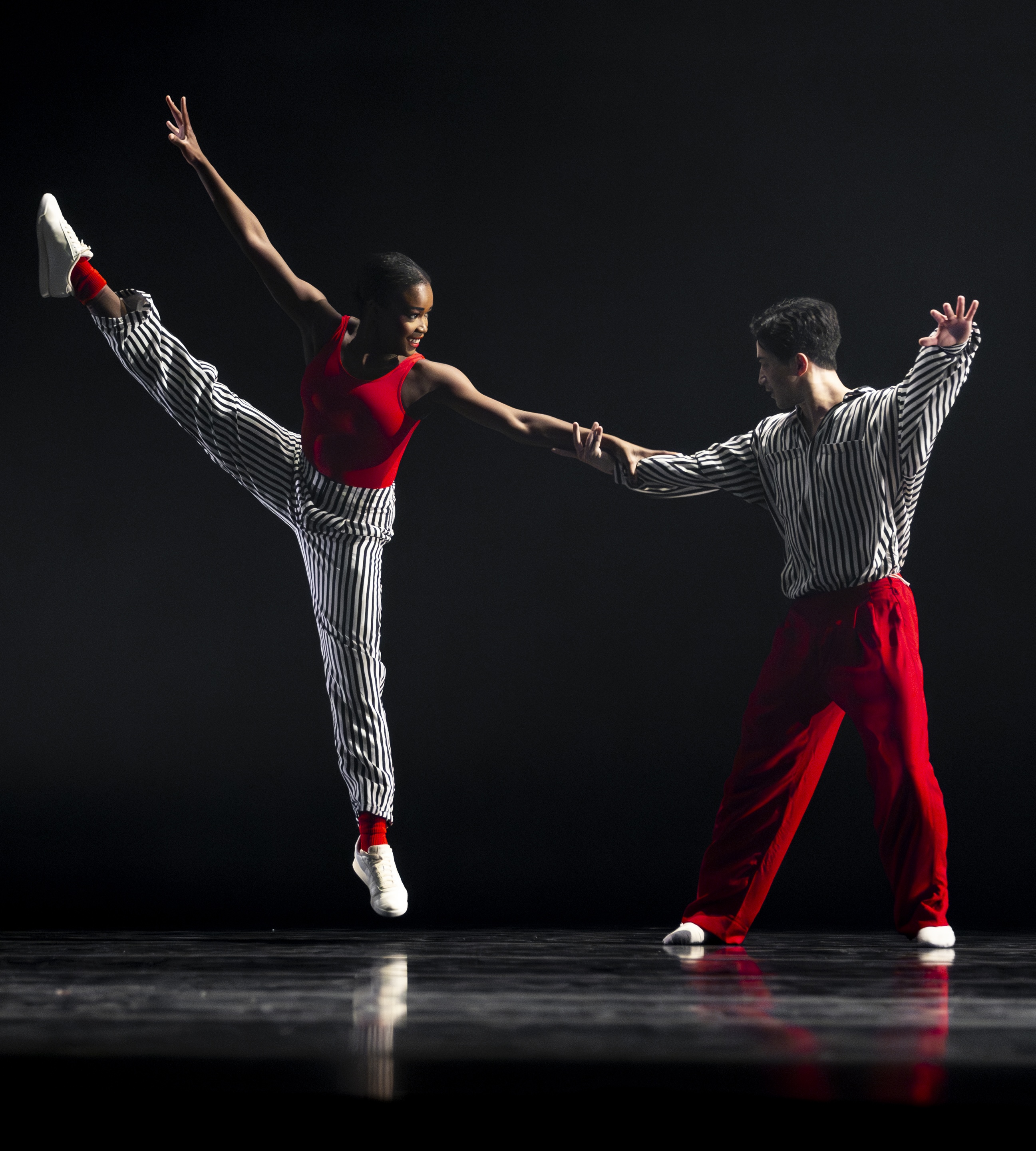
After two Very Deep ballets, Twyla Tharp’s In the Upper Room hits the sensorium like a bright red firetruck. The scene looks like a Jane Fonda exercise video set in some fabulous prison. An extremely capable PNB ensemble stands onstage in black-and-white pin stripe jumpers. (Over the course of the ballet, they’ll start losing articles of clothing, revealing more skin and pops of red.) A racing score from Philip Glass starts up and does not stop. Neither do the dancers. The whole thing feels like watching a ballet at 1.5 speed, with twelve dovetailing mini-acts replete with steps from the worlds of jazz and swing. Dancers never keep a partner for long, and they all look like they’re having as much fun as anybody could possibly have on a treadmill. 

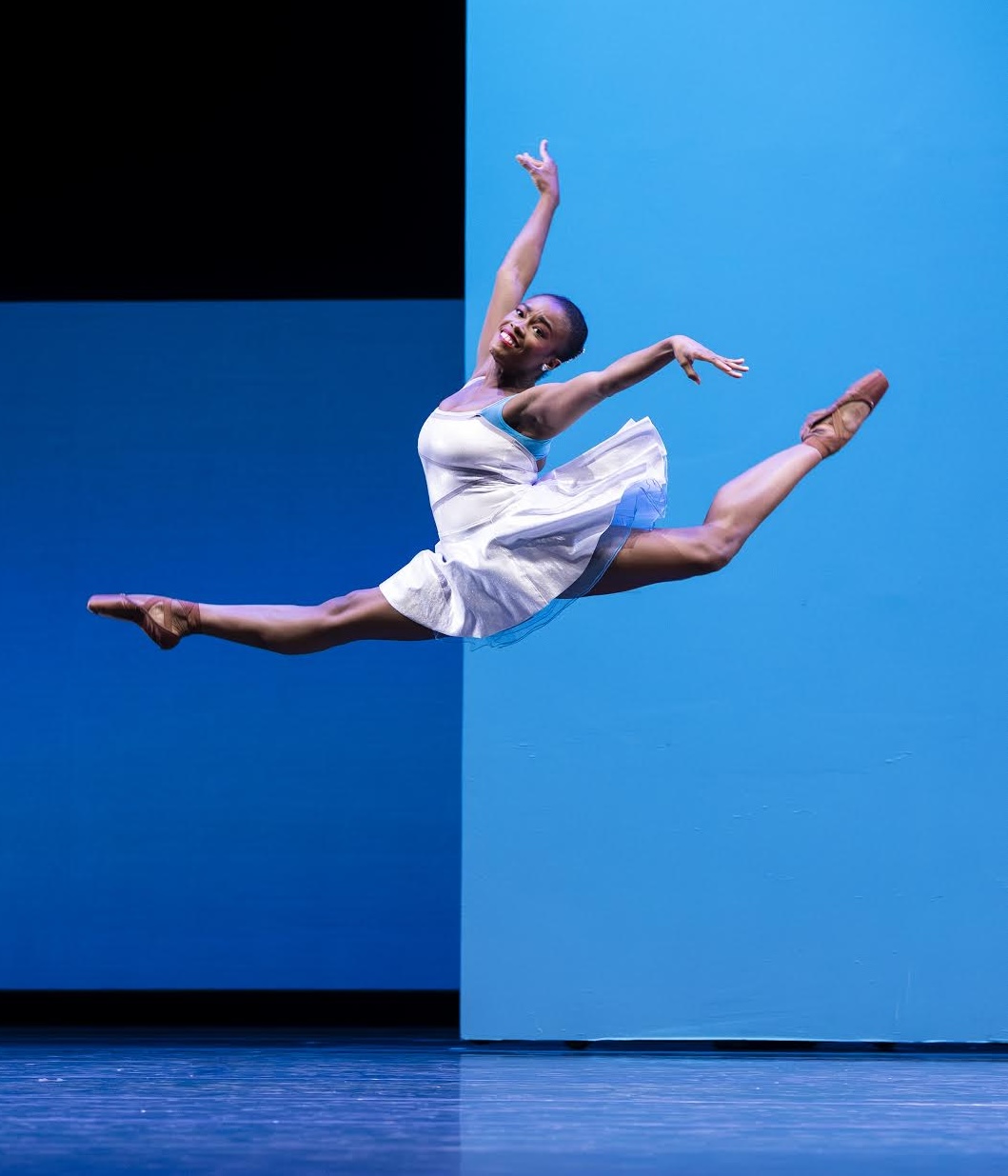
Corps de ballet member Destiny Wimpye (left) showcased incredible athleticism, huge jumps, and beautiful extensions throughout the performance. Photo Credit Angela Sterling.

In the context of this program, In the Upper Room provides the antidote to all the darkness and alienation—light, rhythm, movement, music, sharing space and sweat with people in real life! And of course, a smoke machine turned on full blast.

Dancing at the End of the World 

Uncategorized
Pacific Northwest Ballet company dancers in the world premiere of Rena Butler’s Cracks, a darkly funny ballet that wears its profundities lightly. Photo: Angela Sterling

The three horsemen of summer — joy, warmth, and nostalgia — drive Pacific Northwest Ballet’s Director’s Choice, a handful of ballets specially chosen by PNB Artistic Director Peter Boal to close out the company’s 52nd season, which runs through June 8.

But for all their glitter and gold, the three ballets that compose the program also carry with them an undercurrent of DOOM and UNRESTING DEATH. Far from feeling overbearing, that tonal contrast chimes well with the current seasonal and political climate we’re all experiencing in this corner of the country. Though it’s nice that the light is returning once again to our dark village, it also allows us to see that the last six months were not some weird nightmare. We really are in the middle of a hostile government takeover, and the institutions we’ve shored against our ruin are crumbling.

But they’re not ruins yet! And I don’t mean to go too far down That Road. I only mean to say that the program’s undercurrent of DOOM adds necessary heft to its summer-nights vibe, prompting us to peer beyond the headlines and to ask ourselves deeper questions, such as: What’s it like to be entering the world of ballet in this moment of great uncertainty? What’s it like to be observing this art in the 21st century? Incidentally, did anyone stop to watch the band ~play on~ as the Titanic sank?? And then to answer ourselves with the special intensity that follows a pint of prosecco at intermission: terrifying and wonderful, the same as it ever was, and who wouldn’t?! 

Pacific Northwest Ballet corps de ballet dancer Noah Martzall and soloist Madison Rayn Abeo in Kiyon Ross’s …throes of increasing wonder. Photo: Angela Sterling

Speaking of wonder, PNB Associate Artistic Director Kiyon Ross’s …throes of increasing wonder kicked off opening night with a blast of electric energy. In this ballet, half the company’s dancers streak across the stage in sliver and neon outfits that share a colorway with any given pair of LA Gear sneakers circa 1988. 

The first 10 minutes of this piece feature a lot of unbridled, syncopated joy as dancers seem to race to keep up with composer Cristina Spinei’s manic violins. In all the hubub, soloist Clara Ruf Maldonado turned in the first of her several incredible performances Friday evening — she was pure satin and steel. Not to be outdone, corps de ballet dancers Juliet Prine and Destiny Wimpye demonstrated their ability to leap like gazelles. And corps de ballet dancer Zsilas Michael Hughes spun and jumped onstage for all of 20 seconds, nearly stealing the whole show with the sheer power of their magnetism. 

Corps de ballet dancer Destiny Wimpye can jump really high. Photo: Angela Sterling

I say “nearly” stole the show because that distinction belongs to principals Jonathan Batista and Angelica Generosa. Once the violins slowed to a sob and a deep purple light flooded the stage, Generosa more or less beautifully fainted into Batista’s arms for several minutes — but not in a swoony, romantic way. It was as if she was dancing alone and he was playing her guardian angel; catching her as she swept perilously low to the ground, plucking her out of the air before she leapt too far, lifting her high when exhaustion threatened to bring her low. A stunning duet about the depths of friendship.

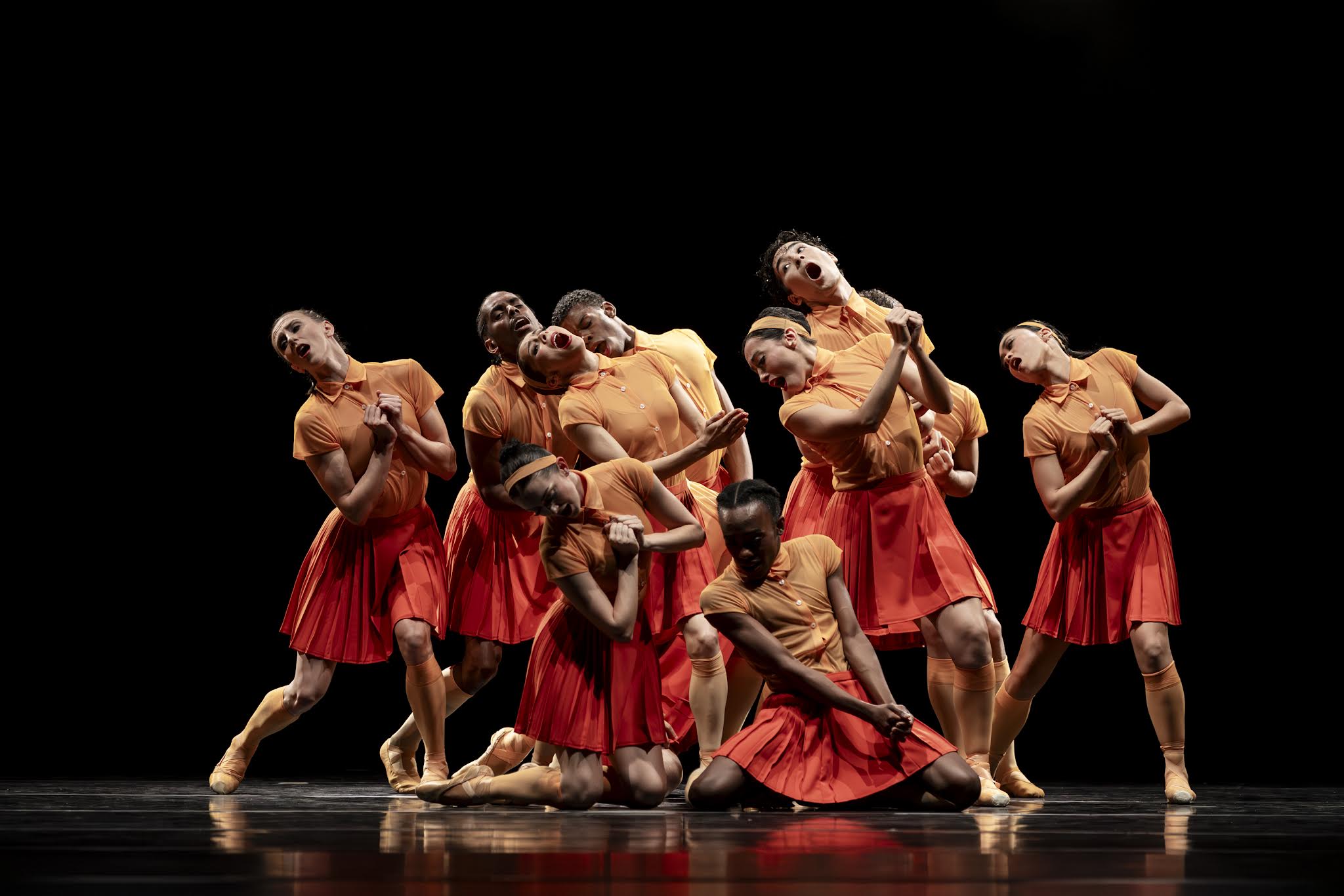
True to form, the set for choreographer and dancer Rena Butler’s world premiere, Cracks, looked like the ruins of the last ballet. The curtain legs were pulled back to expose the auditorium’s bare wings, flies, and klieg lights. The pools of solid color that made up the backdrops of so many scenes in …throes of increasing wonder were busted up into a kaleidoscope pattern reminiscent of broken stained glass. Fittingly, the great Tudor Choir sang haunting, gorgeous choral music while a dozen or so dancers dressed up like Velma from Scooby Doo for some reason (yellow polo, orange skirt) moved variously like pious, awkward Catholic school teens and graceful swans. The unsettling sound of settling rubble or cracks beginning to form in the ceiling troubled the dancers — and the audience — as they took turns trying to stand out in a crowd. 

For some reason, this photo reminds me of some lines from Dean Young’s poem, “Commencement Address:” –“You’ve been such angels, just not very good ones.” Photo: Angela Sterling

And stand out they did. Principal Elle Macy dazzled with a spasmodic solo that seemed specially designed to highlight her particular expressions of strength, fluidity, and control. In one riff, she did a slow backend that ended in the splits that then turned into a kind of lotus position that she somehow frog-jumped out of and landed on her feet. In another moment, Hughes just kinda casually spun 80 times in the corner of the stage while nobody was looking, like some prodigy doing calculus in a 3rd grade math class. Nutso stuff. 


The exposed set and the back-to-school costumes combined with the chorale music to form a question that went something like: We keep feeding a bunch of young, ambitious, idealistic artists into our crumbling institutions — why are we doing that? The sheer talent displayed by the dancers and the sheer genius of Butler’s relatively profound diversion answers the question: because we always have! Even as poetry or dance or theater may come off as dusty or antique — even and maybe especially to the initiated — and even as their institutions undergo dramatic change, we will always have them no matter what new hell our political overlords unleash. Ballet flourished during world wars, famines, plagues and every other disaster the universe has thrown at it, and it will continue to flourish through the next ten wars, plagues, and famines –because these arts are machines designed to refresh language, movement, and the imagination. As pattern-seeking organisms who crave novelty in those realms, we’re always going to need that. 

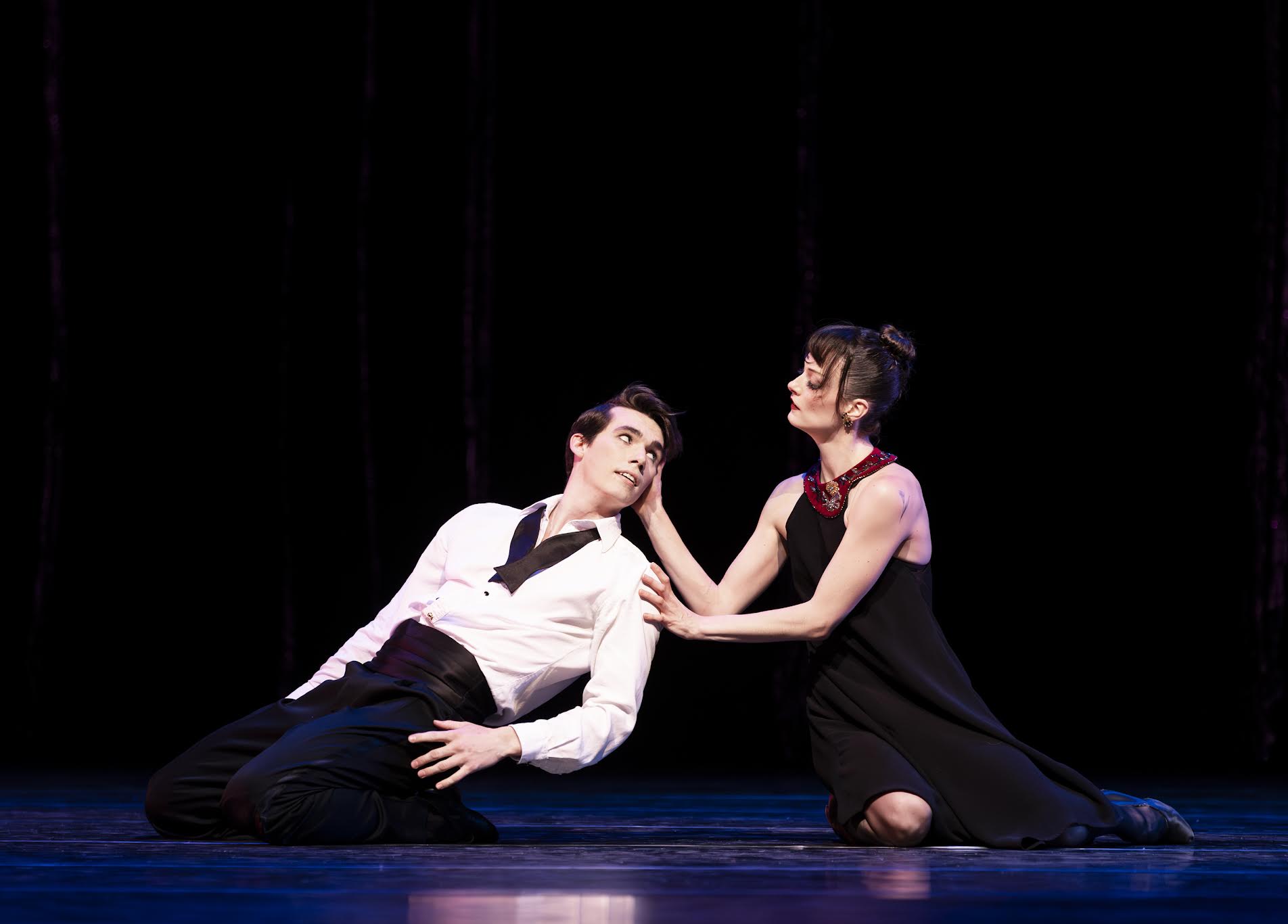
Pacific Northwest Ballet corps de ballet dancers Mark Cuddihee and Lily Wills in Twyla Tharp’s Nine Sinatra Songs. Wills cracked me up.

Speaking of world wars, after Cracks wrapped up, most of the crowd Benjamin-Buttoned into their high school selves as the company eased into Twyla Tharp’s Nine Sinatra Songs, which returned Generosa — now in a pair of pink pumps — to the stage along with principal Dylan Wald. The two served up a classy duet to “Softly As I Leave You” without breaking a sweat. A parade of ballet-infused ballroom dances followed, with several standouts. Soloist Madison Rayn Abeo moved with exacting command as she bossed around corps de ballet dancer Ryan Cardea in a hilarious and impressive bit of dancing to “Something’ Stupid.” And it’s hard to match the verve of corps de ballet dancer Juliet Prine spinning across the stage in a bright fuchsia flamenco dress, but corps de ballet dancer Noah Martzall proved himself up to the task in their rendition of “Forget Domani.” As it turns out, Sinatra’s little dramas of love lost, on the rocks, and just around the corner have some staying power, too. 

It’s all very good! Go watch it this week!

Think you can’t afford the ballet? WRONG. Go pay what you can this Thursday. For everyone else, go Friday, Saturday, or Sunday. Find tickets here

If you just can’t make it this weekend, buy tickets for Next Step on Friday, June 13. The show features original works from PNB dancers. You know, the future!