

Pacific Northwest Ballet’s production of George Balanchine’s Jewels, which runs through October 5 at McCaw Hall, kicks off the company’s 2025-26 season with a dazzling modernist masterpiece that feels kind of crazy to consider in this moment.
This week the president signed an executive order criminalizing anyone who disagrees with him, authorized troop deployments to Portland, and drew coverage for massive financial corruption scandals. As billionaires sell off what’s left of our democracy to enrich themselves and other tyrants, PNB Artistic Director Peter Boal wants us to watch dancers turn into (truly impeccable) fancy necklaces (beautifully designed by Jérôme Kaplan) and entertain little romances onstage (that actually cleverly subvert normie gender roles, as I explain here).
A less glib summary of the ballet’s content makes the show seem even crazier to consider. The evening-length jewel case opens with Emeralds, an ode to French classical ballet that comes complete with lots of courtly movement, long, flowy tutus, and dreamy, impressionistic music from Gabriel Fauré. Rubies turns up the energy and brings us back to America’s roaring ‘20s with its vibrant, jazzy dance numbers that step-ball-change all over Igor Stravinsky’s Capriccio. For the grand finale, Diamonds transports us to imperial Russia. Twelve chandeliers illuminate glittering ballerinas doing swarm arms as they glide regally across the stage to Tchaikovsky’s Symphony No. 3 in D major, an expansive piece that juxtaposes Romantic melodies with all the stately grandeur of St. Petersburg.
In this moment of particularly unrestrained American imperialism, why are we looking back longingly to an era when the French monarchy arguably used ballet as a distraction to shore up its own power, back to the US’s Gilded Age, and back to pre-revolutionary Russia?
Similarly pedantic and moralizing audience members may have raised these very same questions back in April of 1967, when legendary choreographer George Balanchine debuted this show with the New York City Ballet at the New York State Theater (which is now the David H. Koch Theater) just days after hundreds of demonstrators burned their draft cards down the street in Central Park during mass anti-war protests. For those sorts of audience members — those who can’t quite shake off the morning news before entering the theater — I encourage you to dig a little deeper.
The genius of Jewels lies in Balanchine’s choice to ditch the naive narratives of those older eras while retaining and updating their traditional movements and styles. Though narrative vignettes do emerge from the steps occasionally, Balanchine’s approach mostly just gives us the stones, and we provide the stories that gather around them.
When Boal last ran this piece back in 2017, for instance, I obsessed over the ballet’s symmetrical patterns. During this go-round, I picked up on the play between permanence and impermanence, a paradoxical quality shared by ballet and jewels alike. A diamond is forever, but shine a klieg light on one and watch it constantly shimmer and change. Similarly, a performance only lasts for one night, but its movements are grounded in long and definable dance traditions. Small moments and structural facets of the Jewels, such as the clock-hand movements in Emeralds, the fact that Balanchine reportedly created most of these lead roles to show off his particular group of dancers in that moment, and the very personal selection of dance schools all gesture toward his obsession with timelines and timelessness in this piece.
All that blathering aside, Jewels does more or less serve as a kind of skill test for a ballet company, and PNB’s current crop passed with flying colors.
Opening night blessed soloist Amanda Morgan with access to the full spectrum of her powers. She floated across the stage in her turns during the second, more introspective solo in Emeralds, and she shimmered with pluck and verve in Rubies.

Meanwhile, on Saturday, soloist Madison Rayn Abeo turned in a casually flawless debut as the center-cut emerald. She expressed serenity and restraint without coming off like Glenda the Good Witch, held the long arm and leg extensions like a champ, and nailed the little coquettish Frenchy hand gestures sprinkled throughout the choreography. Solid work. None of that is to diminish principal Elizabeth Murphy’s opening night performance, which excelled in its lyricism and control, but that’s no surprise.
What was a surprise was corps de ballet dancer Dylan Calahan impressing the crowd with quick spins, big jumps, and a commanding stage presence on Saturday during his trio with Melisa Guilliams and Juliet Prine. The program says he’s been working since 2022, but I feel like I’ve never really seen him — now I’ll be keeping an eye out.

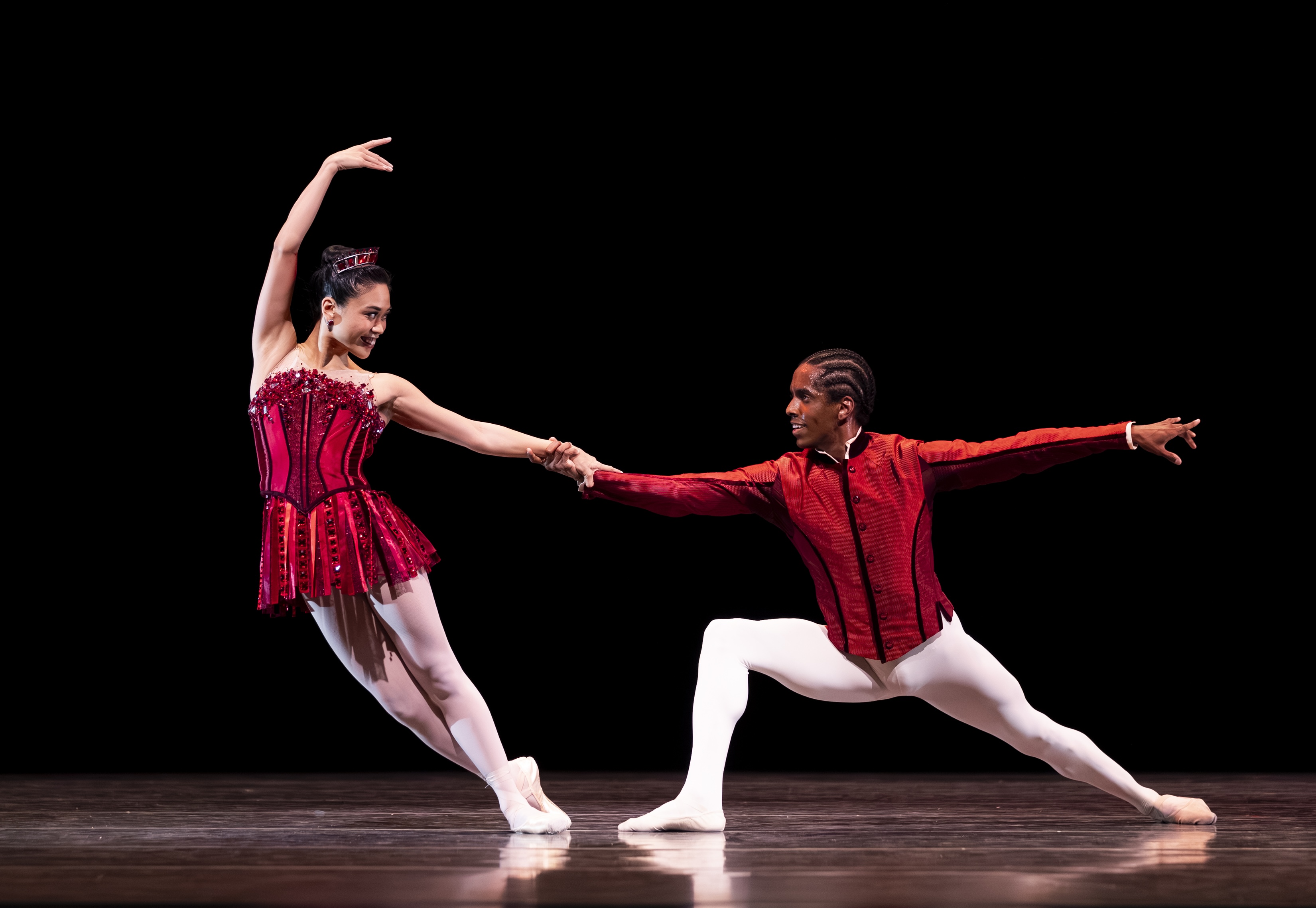
The Friday and Saturday casts offered two different takes on all the jazzy dancing in Rubies. Principals Jonathan Batista and Angelica Generosa cut a rug. They skipped across the stage at speed, laughing and tapping and clapping, the chemistry between them popping and sizzling. On Saturday, principal dancer Sarah-Gabrielle Ryan and corps de ballet dancer Noah Martzall projected a similar level of playfulness, but their syncopations seemed softer and smoother, their energy a little more contained.
But without question, the Rubies MVP of the weekend goes to corps de ballet dancer Ashton Edwards, who was the picture of precision as the sultry soloist. Lots of glam, lots of attitude; all while executing some insane leg extensions and an exquisitely timed courtship with four men. The audience went nuts every time they stomped and shook and shimmied onstage, and rightfully so.
As with Rubies, so with Diamonds — the Friday and Saturday casts allow you to choose your own adventure. Tchaikovsky’s symphony balances stately brass with long, yearning, romantic melodies. Principal Leta Biasucci’s deeply musical, impassioned movement picked up on the symphony’s latter tendency, whereas Elizabeth Murphy’s statuesque poise and power picked up on the former.
I will say that Biasucci was on another fucking level on opening night, though. Of all the dancers on both nights, she seemed the most in tune with the orchestra, holding a pose longer or spiking it depending on the sounds drifting out of the pit.
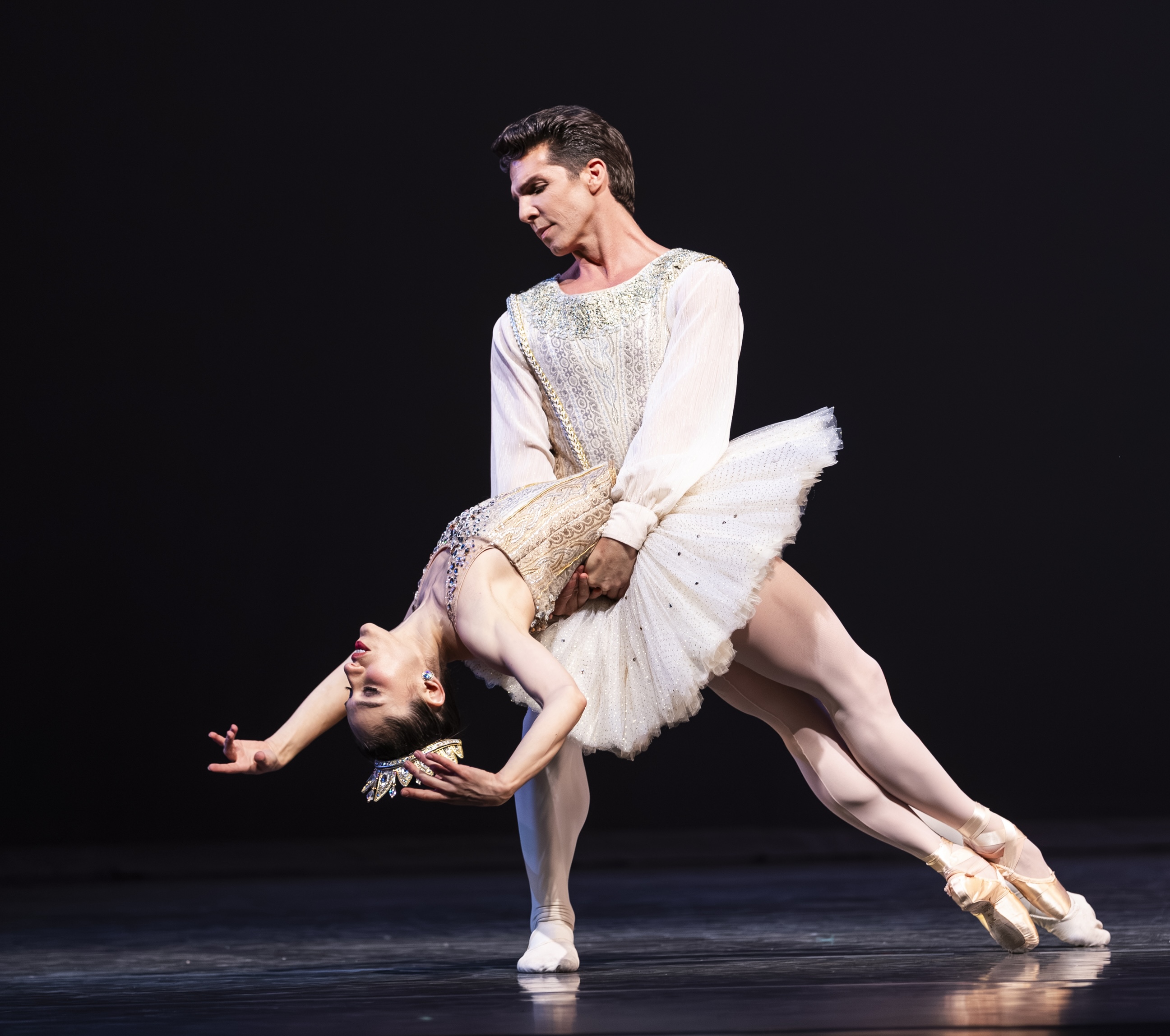
Principal Lucien Postlewaite, who will retire at the end of the year, and Benjamin Freemantle, who joined PNB as a guest for this show, grounded Diamonds with gravitas. Postlewaite effortlessly lifted Biasucci, spun with speed, and played the prince of the mother country with aplomb. Sometimes mercenaries can have trouble fitting in, but Freemantle seamlessly integrated. His clean lines and regal demeanor can come back any time he wants.
In short, Jewels is just gorgeous, and you should go see it. And you should blow a bunch of money while you’re there, especially now, because everyone who makes the ballet run could use some extra cash, as evidenced by the union workers standing outside McCaw Hall over the weekend fighting for a fair contract.
Members of IATSE Local 15, which represents the interests of the stagehands and theater techs responsible for every object that moves or blinks or squeaks onstage, are working on an expired contract. According to a petition they’re passing around, union members say PNB management proposed “unacceptable rollbacks” at the table, including “cutting back overtime calculations, cutting back our jurisdiction, reducing our safety standards, and proposing substandard wages.” They’re calling for management to withdraw those proposals and return to the table to bargain in good faith.
In an email, a spokesperson for PNB says, “We have worked diligently on a contract that matches how work has been done by union stagehands at PNB for decades and have not asked IATSE to give up anything in the process. Local 15 has only made gains in this negotiation and we are struggling to understand their refusal to take these significant wins that would provide them with a contract that stands out among peer organizations for the benefits it provides.”
I’m a union man now (I work as a Communications Director at UFCW 3000), so I say let’s give management a little more confidence in their coin purse by filling the auditorium this weekend, and let’s stand with workers as they fight for a good contract.



 Rich Smith