
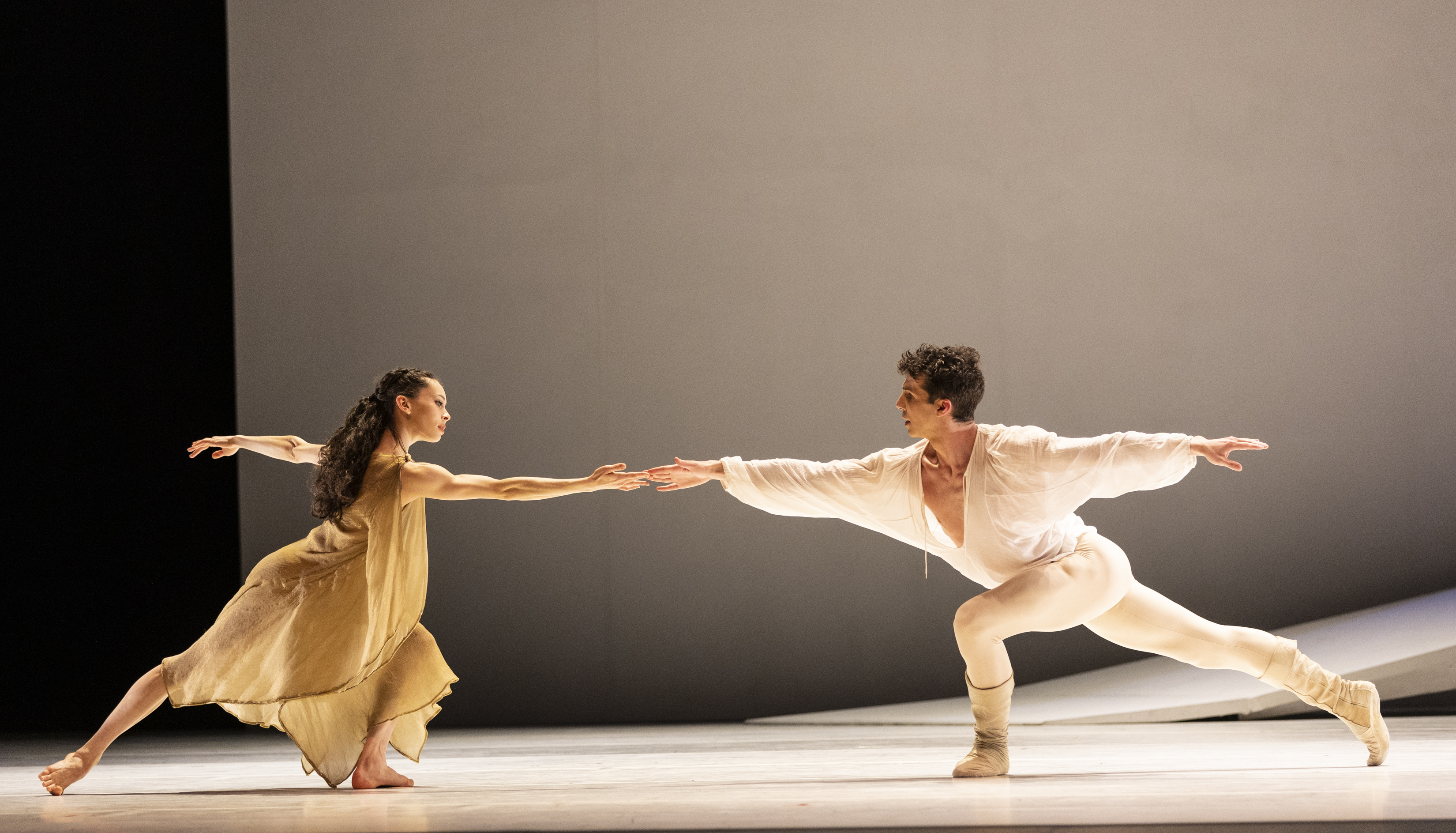
I’ve raved about Pacific Northwest Ballet’s production of Jean-Christophe Maillot’s Roméo et Juliette for years, but this year marked the first performance in quite a while without former PNB principal Noelani Pantastico tumbling across the stage in her signature role as a rambunctious, hopelessly romantic Juliette AND ALSO the first performance without former PNB principal James Yoichi Moore bouncing around the stage in his signature role as the bubbly and charming Roméo. Tough tights to fill.
But my nerves settled knowing that PNB tapped Pantastico and her partner, the talented choreographer Bruno Roque, to stage the show. True to form, Pantastico’s and Roque’s direction maintained all the powers of the earlier performances — the bawdy humor, the cinematic storytelling, the endless pining, the screaming pain, and the way the ballet expresses its biggest ideas in its tiniest gestures — all while making room for the new crew of dancers to make the roles their own.

As a rule, I find story ballets boring—too much empty flouncing. But Maillot’s version of Shakespeare’s tale of woe, which runs at McCaw Hall through April 20, is the exception to that rule, especially in the hands of Pantastico and Roque. While many story ballets feature a lot of fluff and tutus parading for the king, this one gives us three well-structured acts layered with complexity. Act I introduces the players and commences with the fun and games. Act II sparks the romance and commences with the sex and fighting. Act III brings it on home and commences with the killings and tragedy.
Maillot’s brilliant stagecraft shines through in a million ways. His use of textiles, for instance, subtly reinforces the theme of love as both poison and cure. On one hand, a piece of Rosaline’s dress sparks desire, The Nurse’s rag pulls Juliette onstage for the first time, and a satin sheet protects the lovers from the audience’s prying eyes. On the other hand, Roméo’s dropped jacket gives him away, a bloody rag seals Tybalt’s fate, and Juliette pulls a long, red sheet from her true love’s chest at the ballet’s tragic end. Moreover, Maillot’s focus on textiles cleverly references the “text” on which he bases the ballet—the two words, text and textile, share the Latin root meaning “woven.” Fitting, given that artists weave both stories and cloth.
But of course, we see the stagers’ hands most readily in the quality of the performances, which were tremendous all around.
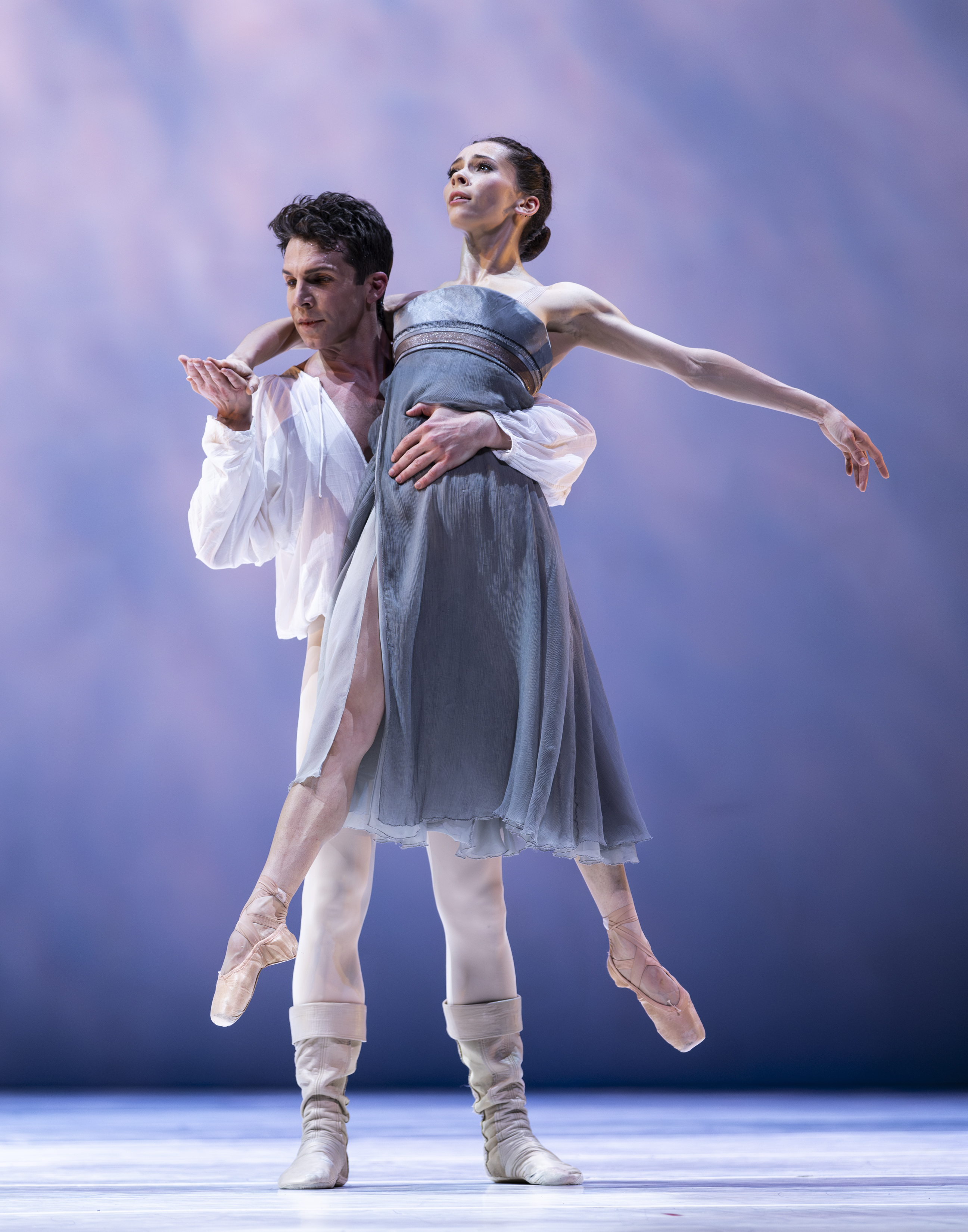
Opening night reunited soloist Clara Ruf Maldonado and principal Lucien Postlewaite, who appeared to be still buzzing with the creative chemistry they developed in February’s production of Jerome Robbins’s Afternoon of a Faun. In that show, the young upstart and the veteran moved with one mind to Claude Debussy’s eponymous prelude, as if they were different fragments of the choreographer’s lackadaisically erotic, sylvan dream.
Though Postlewaite has danced the role of Roméo with Pantastico about a million times over the years, on Friday his performance felt as fresh and as impassioned as ever. Somehow, that grown-ass, 40-year-old man can still believably transform into a lovestruck teenager panting with desire and overflowing with hormones. And yet, his skill and bearing brought a noticeable gravitas to the role. With his back against the wall on Juliette’s not-quite-yet-death-bed, he wept as if he’d known this love for ages, as if he’d lost it a thousand times.
Maldonado picked up the torch—or, in this case, the blood-soaked sheet—from Pantastico and ran with it. Maldonado’s Juliette began the ballet all anxious knees and elbows, softened into a kind of puppy-dog love at the sight of Roméo, and projected a pain beyond her years by the end. And yet, throughout the show her technical prowess and general gumption conveyed the kind of strength and agency that Pantastico imbued into her version of the character. I can’t wait to see what Maldonado does with this tragic figure in what will very likely be a long and storied career.

Other opening night debuts include soloist Christopher D’Ariano as Friar Laurence. D’Ariano’s version of the character — the priest in black and white, the door to love and death — was appropriately grave and rigid, cutting sharp right angles through the air like a living crucifix. But he added more fluid movement that humanized his role a little more, deepening the tragedy.
Principal dancer Elle Macy’s turn as Lady Capulet was magnetic as ever. Her slinky black dresses and her sinuous, powerful movements recalled a spider trapping her prey in a web. Despite her villain-coded character, she moved with grace and palpable grief at the death of her nephew, Tybalt, who was played with an exacting ruthlessness by principal Jonathan Batista.

Principal Kyle Davis also deserves a round of applause for his spirited and haughty Mercutio, and principal Sarah-Gabrielle Ryan had the crowd laughing with her comical (and deceptively difficult!) role as The Nurse.
An ensemble piece like this one demands a strong, multi-talented company that can pair high-level technical ability with premium acting chops. With this crew, PNB yet again shows its more than up to the challenge. GO SEE IT.
And, as always: if you think the ballet is too expensive, then think again. You can pay what you can on Thursdays, and there isn’t a bad seat in the house.
 Rich Smith