
Every year, Pacific Northwest Ballet Artistic Director Peter Boal assembles a program stacked with full-throttle ballets that are perfect for newcomers, dance-heads who’ve only had story ballets to eat since December, and even thirty-year-old actors who haven’t offered much to the world since daring to eat a peach on film more than a decade ago. Firebird, which runs through March 22 at McCaw Hall (tickets), is this season’s version of that program.
The evening opens with a warm, dreamy bit of indie sleaze (affectionate) from choreographer Alejandro Cerrudo, then heats up with a modernist masterpiece by Ulysses Dove, and finally lands on a brisk narrative ballet that doesn’t outstay its welcome! You can’t ask for much more — aside from, perhaps, a pint of prosecco in a sippy cup that you can take into the auditorium. Good news there: you can get one of those at the ballet, too!
It’s been more than twenty years since PNB last produced Kent Stowell’s Firebird, and I think I know why.
It’s not because it’s a somewhat bare-bones Russian fairy tale, interesting primarily if you’re a freak fascinated by Igor Stravinsky’s ascent into dissonance and atonality.
It’s also not because its best moment is a roughly seven-minute burst of chaos, when the entire cast, somewhat inexplicably, descends into a hellscape ruled by a lich king with very long fingernails, who unleashes on our protagonists a swarm of early 1980s-era Jim Henson–style demon-animals.
It’s because they had to wait for principal ballerina Angelica Generosa to be born so she could play the titular role.
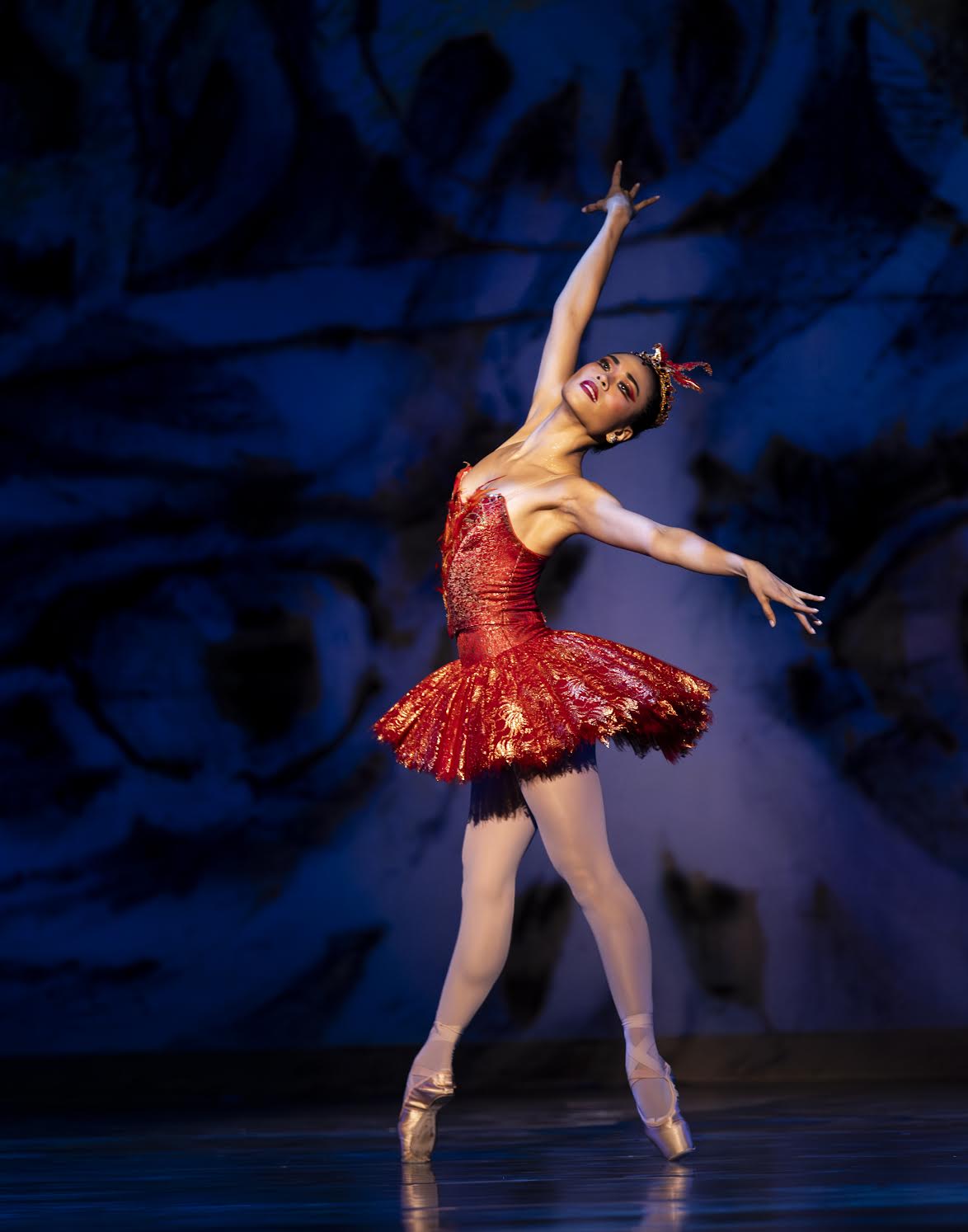
Generosa fully transforms into a blaze of a bird, splaying her hands like wings, darting around the stage, primping and preening, leaping wildly, and eyeing Prince Ivan (played on opening night by principal Jonathan Batista) with the kind of crazed avian side-eye you get when you spook a seagull.
Unfortunately, she is the only one who really gets to go nuts out there. Though Batista plays a regal prince as well as anyone, he has far more chemistry and stage time with the bird than with his bride, which is no fault of soloist Leah Terada, who brings as much grace and charm to that role as anyone possibly could. The climactic hell scene, decked out with a wild, psychedelic backdrop by scenic designer Ming Cho Lee, certainly entertains, but the dancing itself is fairly standard.
Would I trade a dazzling fairytale with a ho-hum story for another forty-five minutes of character development and courtly choreography? Absolutely not! Would I rather see another Cerrudo piece or two? YES. But then we wouldn’t have such a well-rounded program that’s genuinely fun for the whole family, now would we??
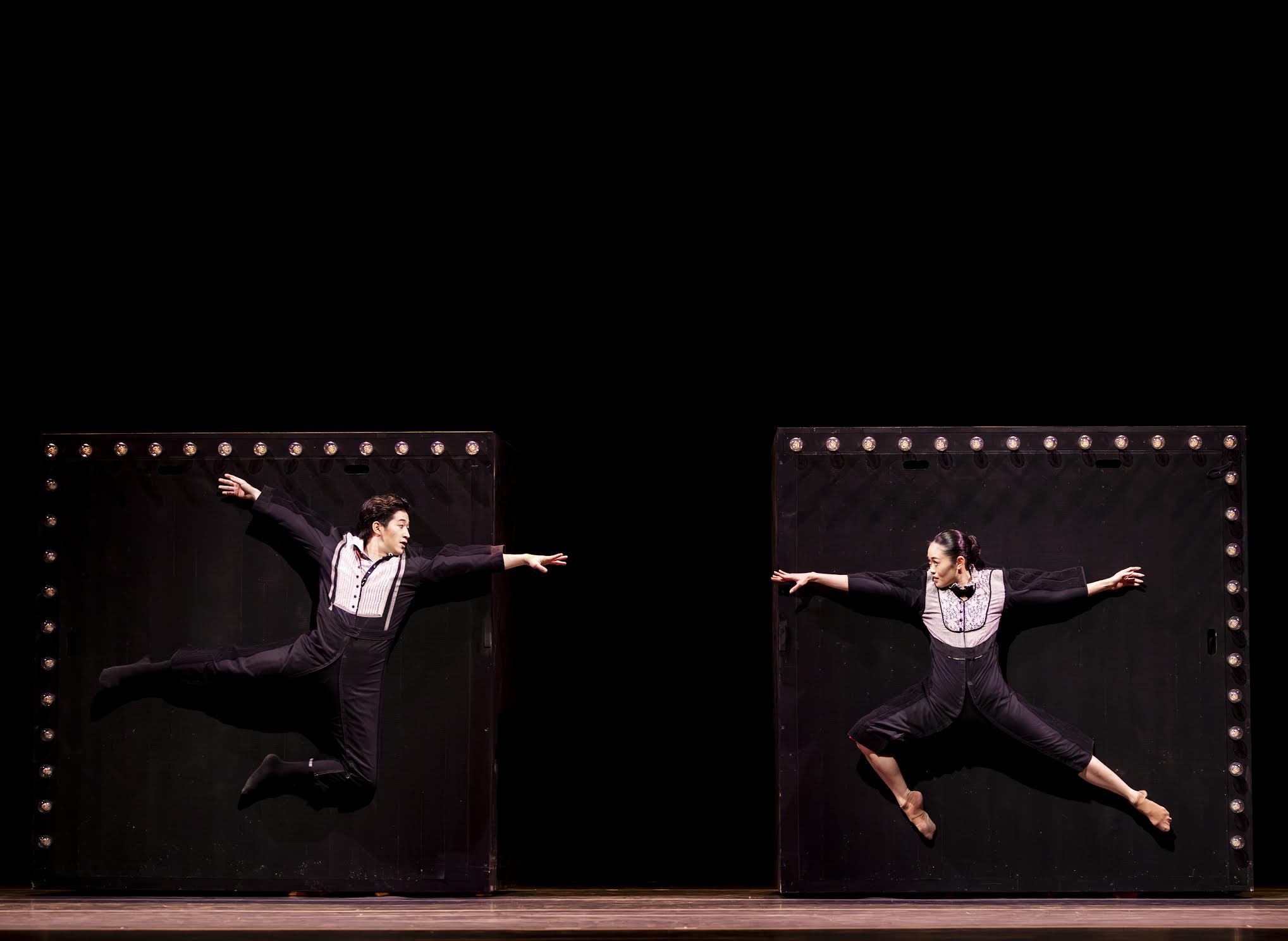
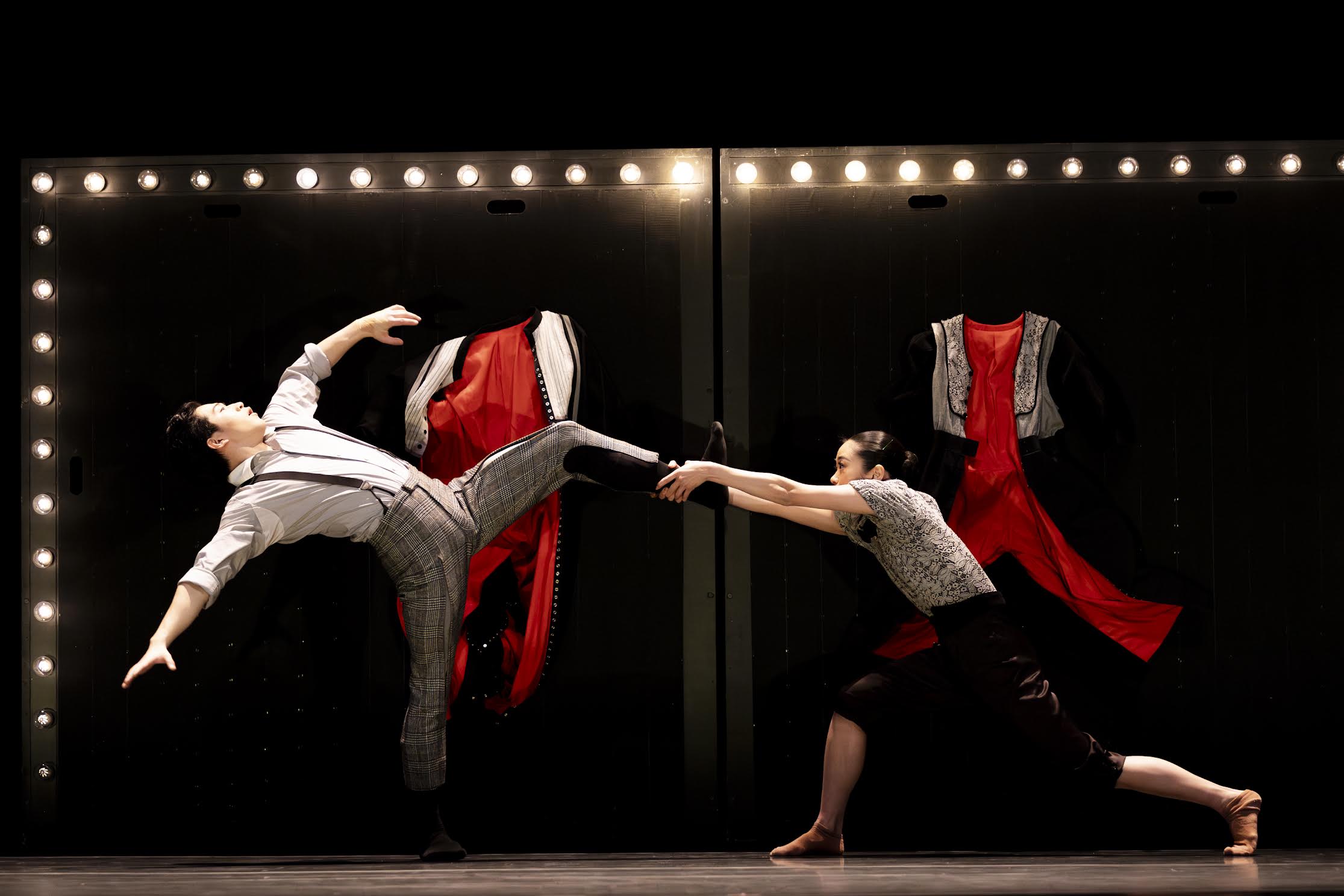
Speaking of Cerrudo: his Little mortal jump, which PNB programs frequently (and for good reason), starts the evening on the right foot. The quick and compact ballet offers a kind of Michel Gondry-type magical realism set to an early 2000s fuccboi playlist (affectionate) featuring Beirut, Andrew Bird’s Bowl of Fire, Philip Glass, and other music I listened to (and loved) while pining on barstools as an undergraduate.
Costume designer Branimira Ivanova dresses the dancers as if they’re headed to Zooey Deschanel’s 2005 New Year’s Eve party—lacy minidresses, skinny slacks, suspenders—then sends them onstage to tackle Cerrudo’s choreography, which has them leaping into the orchestra pit, somersaulting wildly, and getting Velcroed to giant, spinning black boxes.
Knowing little jabs aside, I love this ballet and Cerrudo’s movement vocabulary in general. Watching dancers navigate his gyroscopic, super-fluid, perpetually surprising steps feels like watching two people speak in a language you’ve never heard before but somehow understand with your whole body. Like any long love, the movement is variously erotic, melancholic, and ecstatic, full of yearning and remarkable feats of coordination and strength. At one point, for instance, soloist Christina Poppe holds Generosa upside down, and she somehow spins in his arms. (Or maybe I dreamed that?) In any event, I would happily watch it a thousand more times.
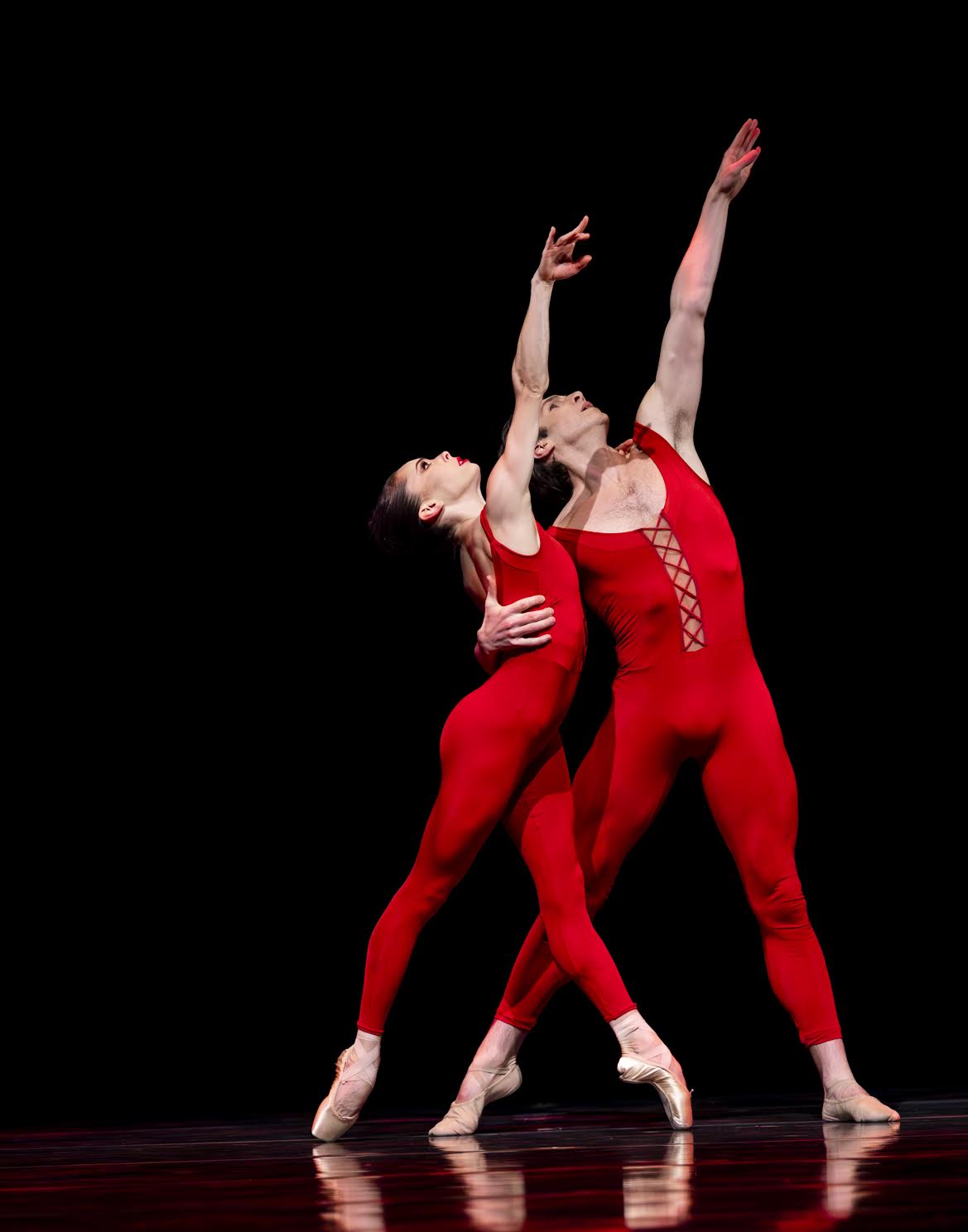
I’d say the same for Ulysses Dove’s Red Angels, which was probably my favorite ballet of the night. It’s hyperkinetic, it’s confrontational, it’s vulnerable, it’s saucy, it’s powerful, it’s impossible to look away from.
Michael Jinsoo Lim’s fittingly demonic violin drives Richard Einhorn’s score, Maxwell’s Demon. His playing produces a percussive effect alongside manic string textures, effectively turning him into a one-man band.
As this frenzy of sound fills the room, fire-engine red light floods the stage, where four dancers in bright red leotards appear to step off their marble pedestals before going absolutely feral for about twenty minutes. The opening-night cast included soloist Amanda Morgan, along with principals Lucien Postlewaite, Christopher D’Ariano, and Clara Ruf Maldonado. All were superb, but Postlewaite and Maldonado were something else.
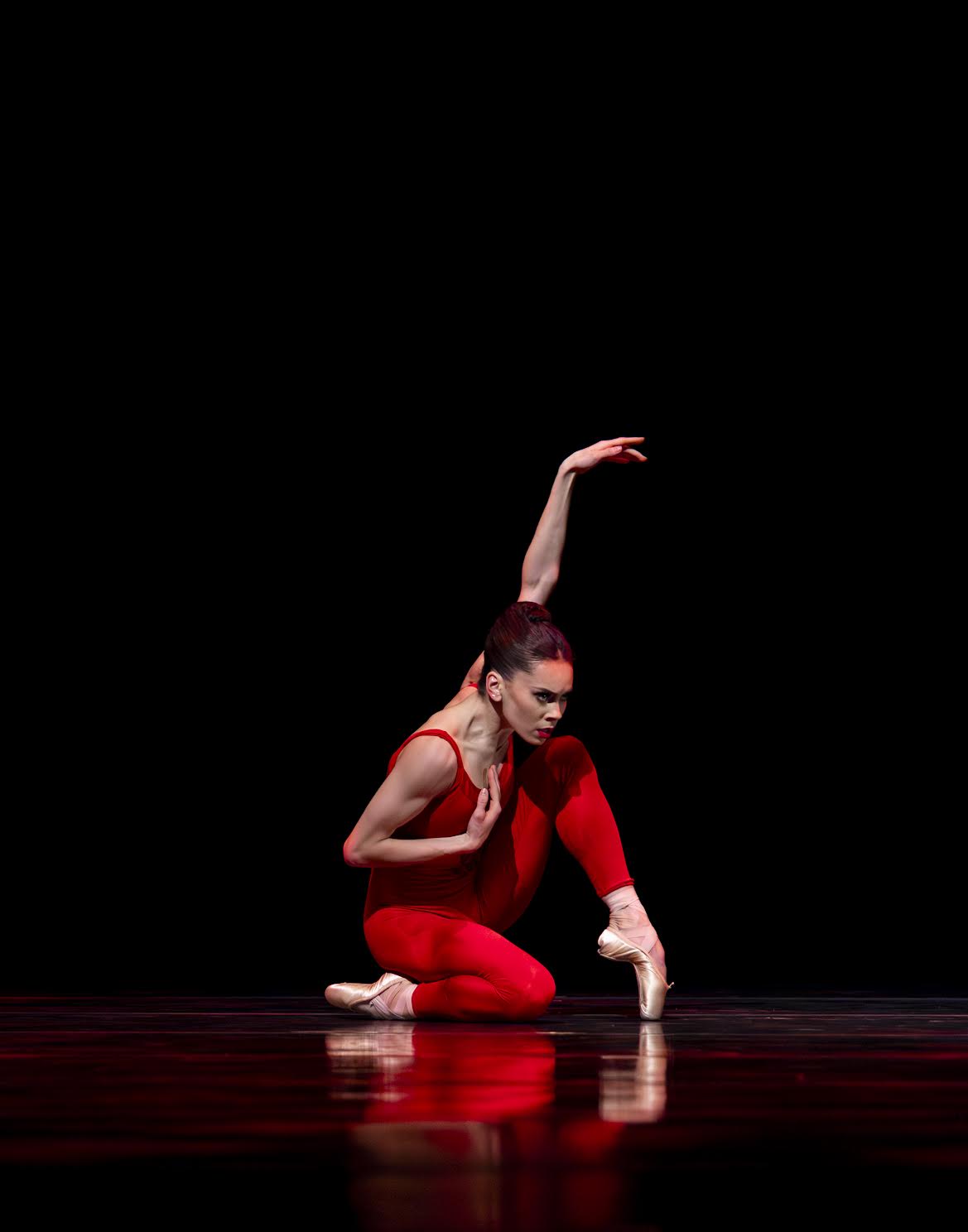
Maldonado may need to stop being quite so good before she literally combusts; her dancing lately already commands the hypnotic pull of a bonfire. Attitude, musicality, strong lines, athleticism—you need all of that running at the highest levels to make this ballet come alive, and she delivers in spades, hearts, clubs, diamonds, etc. Postlewaite matched her in every respect, delivering gravitas and verve in equal measure. Incredible stuff. It feels like he could go on dancing for another forty years.
Now that we’re done thinking about the movies, go to the ballet and watch the city’s most talented artists do some of the most challenging shit imaginable!



 Rich Smith